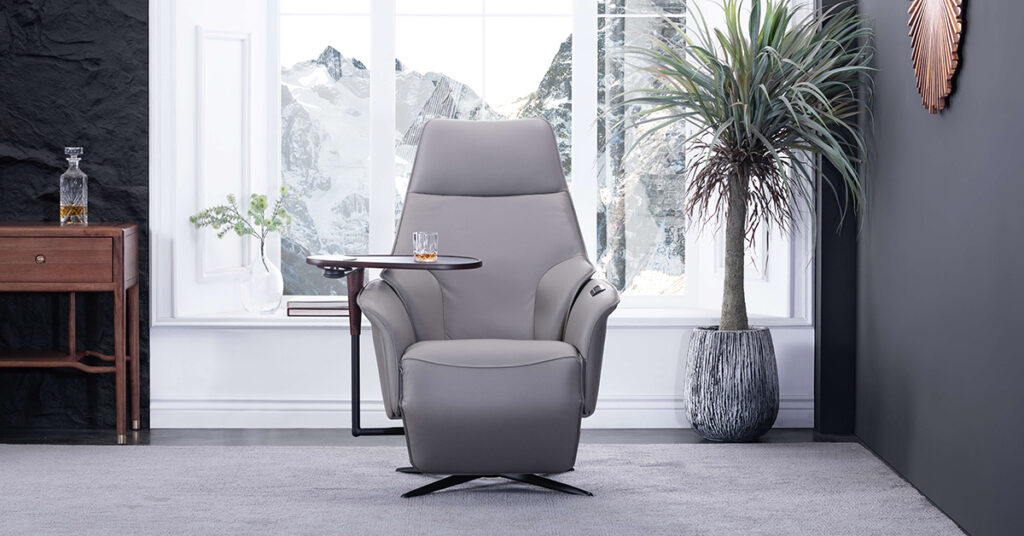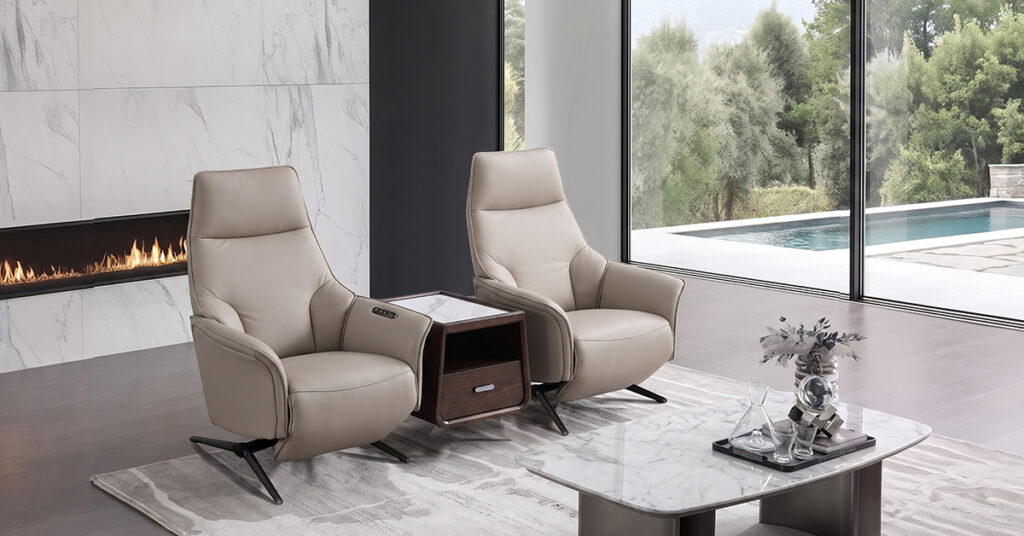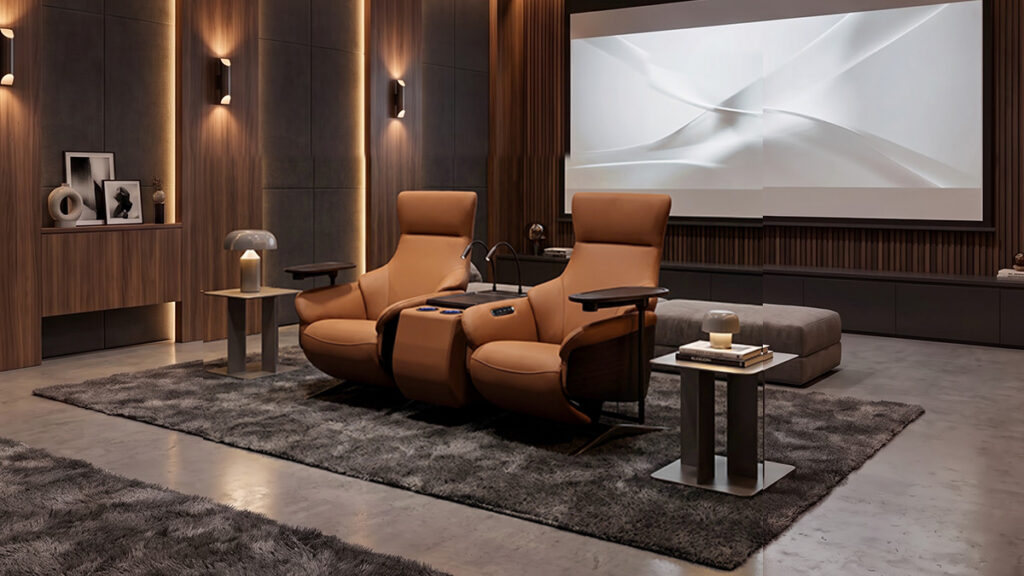
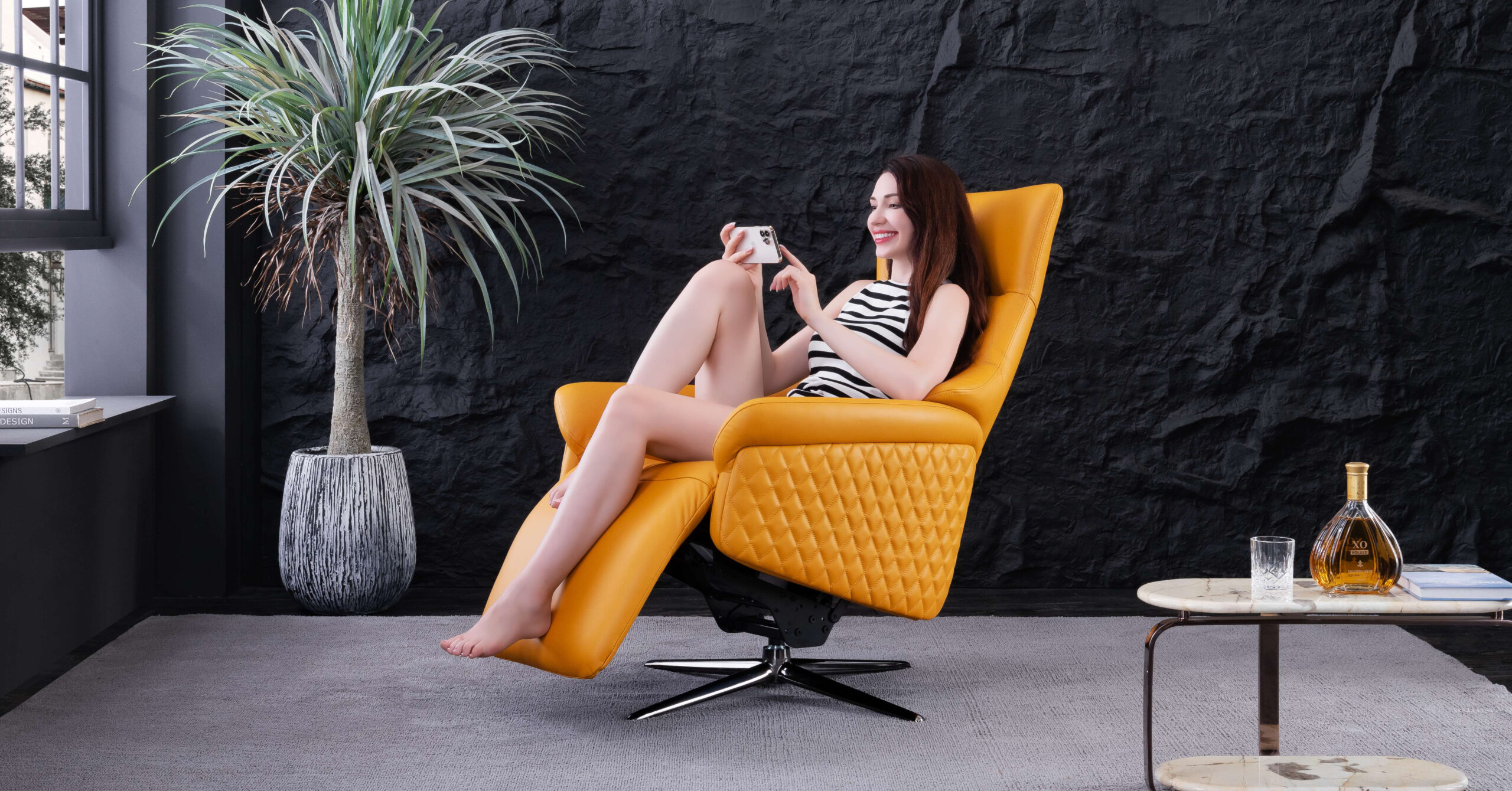
The home office power recliner is quickly becoming the ultimate upgrade for remote workers, and for good reason. Let’s be honest: the traditional office chair was never designed for the way we actually work today.
It was designed for a 9-to-5 world where you sat upright, answered phones, and occasionally walked to the water cooler. But remote work changed everything. Millions of people now spend 8, 10, even 12 hours a day in their home office — and their bodies are paying the price. That’s where the home office power recliner comes in.
Enter thehome office power recliner.
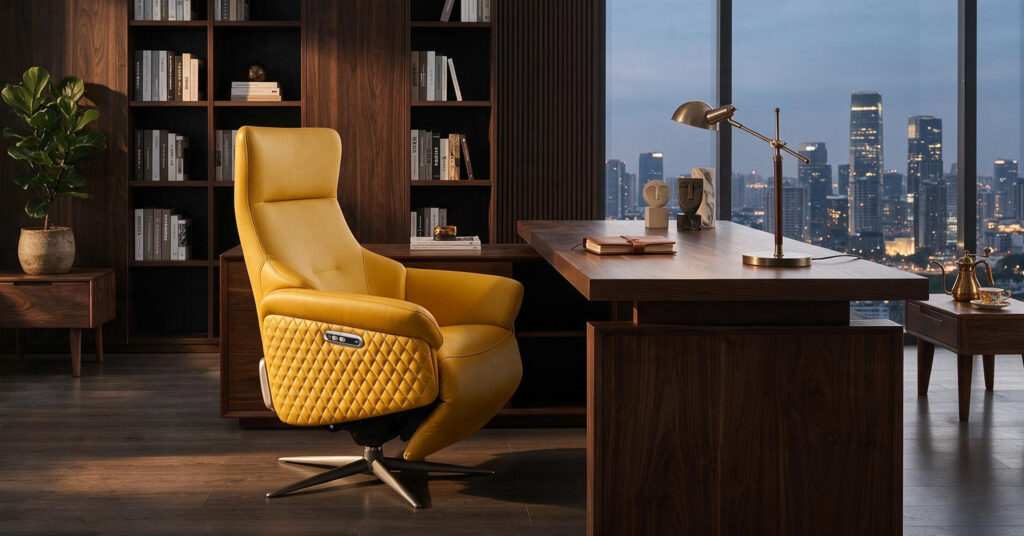
What was once considered “grandpa’s chair” is quietly becoming one of the most sought-after pieces of home office furniture. And for good reason.
The Remote Work Reality Check: Why You Need a Home Office Power Recliner
According to market research, the recliner sofas market is forecasted to grow by USD 8.47 billion between 2023 and 2028, accelerating at a compound annual growth rate of 7.04%-. While much of this growth comes from living rooms and home theaters, a significant driver is the normalization of remote work and home-centric lifestyle trends.
Here’s what’s happening: people are realizing that sitting ramrod straight in a $200 task chair for eight hours isn’t sustainable. It’s not comfortable. It’s not healthy. And it’s certainly not productive when your back is screaming by 3 PM.
Consequently, more and more remote workers are asking themselves a simple question: why can’t my office chair be comfortable? why can’t my office chair be comfortable?
Health Benefits of a Home Office Power Recliner (No One Talks About)
The human body wasn’t designed to sit in a 90-degree angle for hours on end.In fact, research shows that reclining the backrest to an angle of 110° to 135° significantly reduces intradiscal pressure and muscle activity in the spinal erectors-.
Here’s what that means in plain English: when you recline slightly, you take pressure off your spine.
A recliner’s primary advantage is its ability to open the angle between your torso and thighs-. This can dramatically reduce spinal disc pressure and muscle activation in the core, providing substantial relief for those with chronic back pain-.
Compare that to a standard office chair:
A home office power recliner fundamentally changes how your spine bears weight.
| Office Chair | Power Recliner |
|---|---|
| Forces 90° hip angle | Opens hip angle beyond 90° |
| Constant spinal pressure | Offloads spinal pressure |
| Limited position options | Infinite adjustable positions |
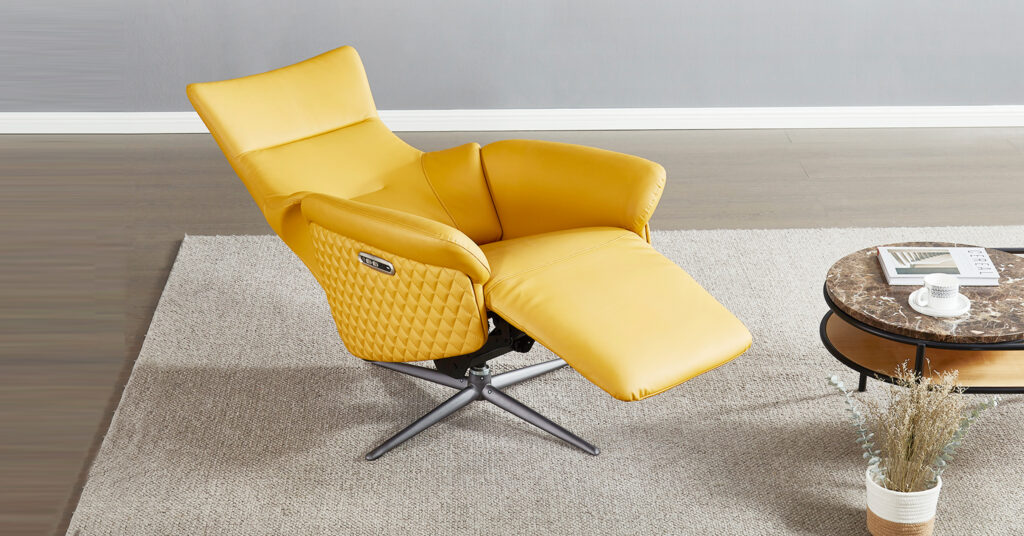
| No foot support | Built-in footrest |
| Neck strain from looking down | Adjustable headrest support |
The difference isn’t subtle. For instance, a semi-reclined angle of 120° to 135° can reduce disc pressure and muscle activity, supporting longer contemplation sessions without fatigue of 120° to 135° can reduce disc pressure and muscle activity, supporting longer contemplation sessions without fatigue-. And with a recliner, your head and neck can rest against the backrest, reducing neck muscle effort throughout the day-.
Design Revolution: How Home Office Power Recliners Have Evolved
Here’s the thing about modern power recliners: they don’t look like medical equipment anymore.
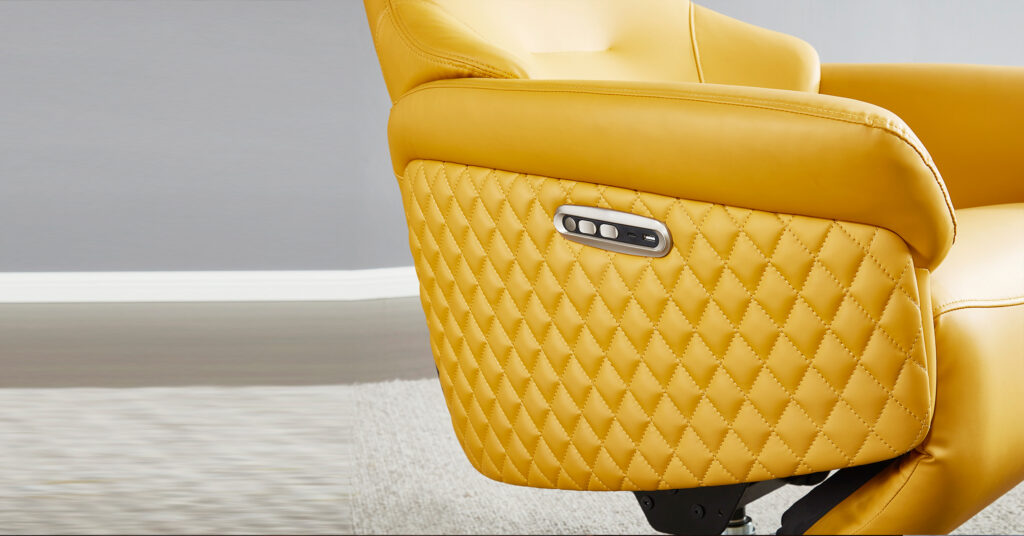
The days of clunky, oversized recliners with visible levers are over. Today’s power recliners feature what industry insiders call “invisible motion” design-. The mechanics are hidden. The controls are discreet touch sensors, not bulky levers-.
Take the Joybird Corey swivel chair power recliner, for example. It features a rounded silhouette, swivel base, and concealed power reclining footrest. Officials note the design works well for the living room, nursery, home office, or den-.
Similarly, the Ardwell Dual Motor Power Recliner features a rotating base with a sturdy star-shaped design, enabling smooth movement and easy repositioning — making it an ideal addition to a home office, especially with the rise of hybrid and flexible working-.
These aren’t “recliners.” They’re pieces of furniture that happen to recline.
Must-Have Features of a Home Office Power Recliner
Not all power recliners are created equal. The ones making their way into home offices share a few key features:
1. Swivel Bases
A stationary recliner doesn’t work in an office. You need to turn, reach for files, glance at a second monitor. Modern home-office recliners come with 360-degree swivel bases that let you move without leaving your seat-.
2. Power Headrests and Lumbar Support
Independent headrest adjustment fine-tunes neck and head support to reduce strain during extended seating sessions-. Powered lumbar support alleviates lower back pressure, while adjustable headrests improve your line of sight for ultimate comfort-.
Some models, like the Amallo Ivory Power Recliner, offer motorized controls that provide smooth, one-handed adjustment of both recline and footrest positions-. No awkward leaning, no wrestling with levers.
3. USB Charging Ports
Built-in USB ports mean your devices stay charged while you work-. No more hunting for outlets or running extension cords across the room.
4. Battery Backup
Some power recliners now come with built-in battery packs, providing ultimate comfort without the hassle of cords-. This is especially useful if you like to rearrange your space or want to avoid cable clutter.
5. Zero Gravity Positioning
Zero gravity technology redistributes weight to reduce pressure on the lower back and legs-. It creates a feeling of weightlessness that can be incredibly restorative during long work sessions.
Can You Be Productive in a Home Office Power Recliner?
This is the question everyone asks.
The short answer is: yes — with the right setup.
Working from a recliner can be a comfortable and productive experience-. The key is treating it like a workstation, not a napping spot.
Here’s what you need:
- A monitor at eye level. This prevents neck strain. Whether you use a monitor arm, a floor stand, or a wall mount, your screen should be at a natural viewing height-.
- A keyboard and mouse positioned to prevent excessive reaching. Your arms should be at roughly a 90-degree angle when typing-.
- A stable surface. Some people use lap desks. Others use adjustable-height desks that slide over the chair-.
- A desk with adjustable height options to accommodate different recline positions-.
The comfort of a recliner isn’t the problem — it’s the improvised setup that causes strain-. Get the ergonomics right, and you can be productive all day while actually feeling good at the end of it.
Who’s Already Using a Home Office Power Recliner?
The trend is already happening across multiple demographics:
Remote workers are trading their stiff office chairs for something that supports both work and rest. As one user noted, using a recliner as an office chair meant they could lean back to give their hips a break when tired, and keep legs elevated to promote better blood flow-.
Meanwhile, freelancers and creatives are embracing the flexibility. Long contemplation sessions benefit from a semi-reclined position that reduces physical fatigue while keeping the mind sharp-.
Parents working from home are finding that a power recliner can serve double duty — office chair during the day, nursing or reading chair in the evening-.
Seniors and those with mobility issues appreciate the lift-assist functionality, which makes standing up effortless-.
The market is responding. Modular power recliners now hold 42.8% of the market share, compared to 29.5% for manual versions-. People are voting with their wallets — and they’re choosing power.
The Bottom Line: The Home Office Power Recliner Is Here to Stay
The traditional office chair had a good run. But the way we work has changed, and our furniture needs to change with it.
Power recliners are becoming the new home office essential because they solve problems that office chairs can’t:
- They reduce spinal pressure-
- They offer infinite adjustment positions-
- They support both focused work and restorative breaks-
- They look good enough to belong anywhere in your home-
- They’re designed for the way we actually live and work today-
The question isn’t whether power recliners belong in home offices anymore. The question is: why aren’t you already using one?
Ready to upgrade your home office setup? [Browse our power recliner collection →] and find the chair that works as hard as you do.