The short answer is yes. People do it, and evidence supports it for certain conditions. However, “can you sleep in a power recliner” is the wrong question. Instead, power recliner sleep requires a narrower, more useful question: When does a recliner help? Where does it stop helping? And consequently, when does it cause new problems?
This is not another buying guide. Instead, we will review what clinical and biomechanical evidence shows about recliner sleep. Furthermore, we will cover the details most product pages leave out.
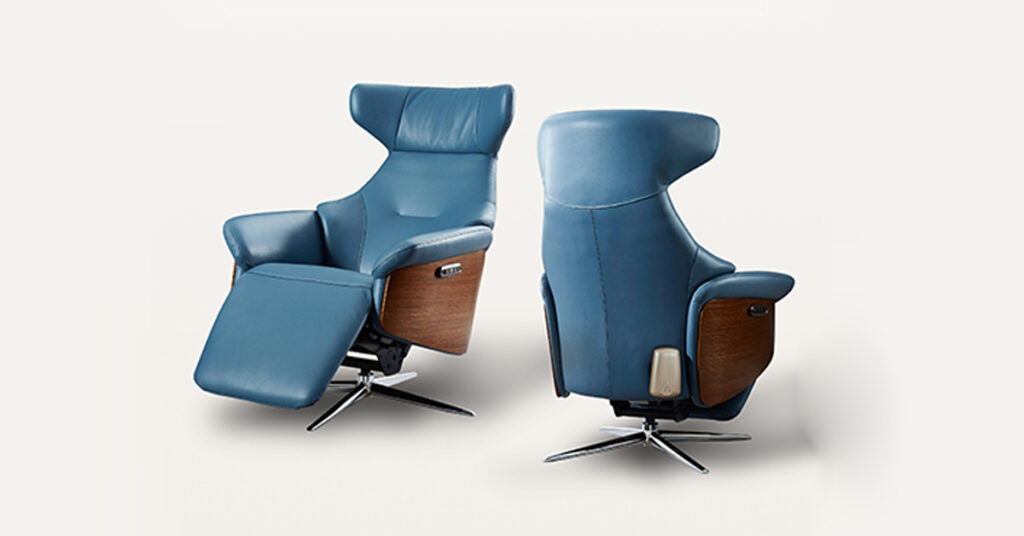
What the evidence supports: four scenarios where power recliner sleep has a real basis
Acid reflux: the strongest case, with a specific angle
Nighttime GERD has the clearest evidence. Basically, lying flat removes gravity from the equation. As a result, stomach acid travels more easily into the esophagus, and acid clearance time worsens. For example, the American College of Gastroenterology endorses head-of-bed elevation as a non-pharmacologic strategy. Additionally, the American Gastroenterological Association recommends combining head elevation with left lateral positioning.
The numbers matter. Specifically, a 2012 study found that 65 percent of people with nighttime acid reflux had fewer sleep disturbances. They elevated their heads by about 8 inches. Furthermore, a more rigorous trial measured acid exposure directly. It showed that at roughly 8 inches of elevation, supine acid exposure time dropped from 15.0% to 13.7%. Meanwhile, acid clearance time shortened from 3.8 to 3.0 minutes per episode.
What does this mean for a recliner? A chair angled to roughly 30 to 45 degrees replicates and often exceeds bed blocks. Because of this, many people report stronger relief from a recliner than from a pillow arrangement. Below 20 degrees, the benefit is minimal. Fully reclined, the advantage disappears. Therefore, the recliner must stay in a half-recline position to deliver the evidence-supported benefits.
Obstructive sleep apnea: an add-on, not a replacement
Elevated sleep reduces the severity of obstructive sleep apnea (OSA) in some people. Specifically, it uses gravity to pull soft tissue forward, away from the airway. The effect is measurable but modest. For instance, a 2025 multicenter study found that 30° head-of-bed elevation cut the apnea-hypopnea index (AHI). The AHI dropped from 25.7 to 17.8 events per hour compared with lying flat. Interestingly, about half of participants with OSA responded. Even a slight 7.5° incline lowered the median AHI from 15.7 to 10.7 in an earlier study.
However, the boundary is equally clear. Positional elevation rarely brings the AHI into a normal range for moderate-to-severe OSA. In fact, a 2019 Cochrane review found that CPAP lowers breathing events more effectively than positional approaches. Therefore, we frame this as a complementary strategy, not a substitute. It is useful for mild or positional apnea. Additionally, it may help people who cannot tolerate CPAP. But it cannot replace prescribed therapy in moderate-to-severe cases.
Post-surgical recovery: a temporary tool, not a requirement
For example, surgeons commonly recommend recliner sleeping after shoulder procedures. These include rotator cuff repairs and total shoulder replacements. Sleeping flat or on the side puts pressure on the healing joint in the first weeks. Consequently, many patients find a 30–45° propped position more comfortable. The recliner also makes getting in and out easier when one arm is immobilized.
However, here the evidence is more nuanced than the common claim that a recliner is “necessary.” At least one shoulder surgeon states plainly that no medical evidence supports this idea. Instead, many patients sleep better propped in bed with pillows. Ultimately, clinical guidance concludes a recliner is a legitimate comfort tool for the first two to six weeks. This is especially true if bed sleeping is painful. But it is not a mandatory part of recovery. Most patients transition back to a flat surface once the surgeon clears them.
Heart failure and breathing-related orthopnea: a recognized accommodation
Additionally, people with congestive heart failure often experience orthopnea. This is breathlessness that worsens when lying flat. Specifically, fluid redistributes toward the lungs. Upright sleeping is a recognized way to manage this. Furthermore, central sleep apnea, common in heart failure patients, also diminishes when the head is raised. Therefore, for this group, a recliner is not a comfort preference. It can be a functional accommodation for breathing. The same logic applies to some people with COPD or severe obesity. They breathe more comfortably with the head elevated.
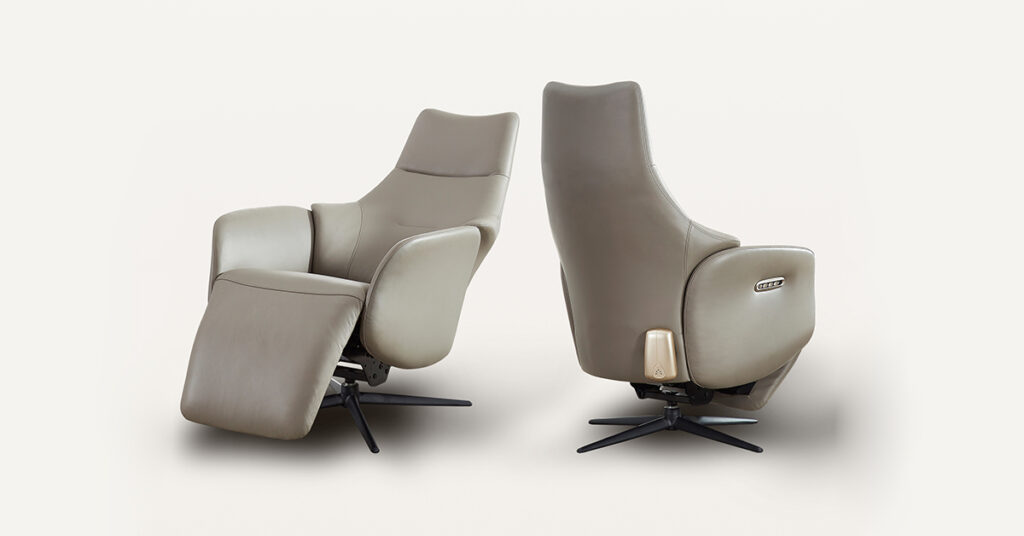
Where the evidence stops: three limits that change the decision
A recliner is not a CPAP machine
First, this is the most important boundary. Sleep medicine sources consistently state it. Because CPAP acts as a continuous pneumatic splint, it keeps the airway open regardless of gravity. However, head elevation only changes the gravitational component of airway collapse. This produces partial improvement in some people and little improvement in others. For mild OSA, elevation may be a meaningful part of a treatment plan. But for moderate-to-severe OSA, it should not be a complete substitute without clinical guidance.
There is also a practical trap. Sleeping in a recliner can change the apparent severity of OSA without treating it. For example, one user compared CPAP data between bed sleep and recliner naps. Episode counts in the recliner reached 29 to 37. By contrast, they were only 2 to 7 in bed with CPAP. This reminds us that position changes the readings. Feeling “better” is not the same as adequately treated.
The legs-down problem and venous risk
Second, the typical recliner sleeping position keeps the knees bent and the feet below heart level. Unfortunately, this is the opposite of what venous physiology favors. Prolonged seated immobility creates venous stasis in the deep veins of the legs. Consequently, this is the same mechanism implicated in travel-related deep vein thrombosis (DVT). For instance, Cleveland Clinic lists “sleeping in a chair or recliner” among risk factors for chronic venous insufficiency. They advise lifting the legs above heart level to reduce pressure in leg veins. However, a standard recliner does not do this.
Furthermore, caregivers often notice the visible sign first: ankle and calf swelling in someone who has shifted to nightly recliner sleeping. This reflects venous pooling. The risk is higher in older adults who cannot easily shift position independently. It is also higher in people with existing circulation risk factors.
Positional fixation: pressure, posture, and the inability to turn
Third, people change position through the night without thinking about it in bed. In contrast, in a recliner, the body largely locks into one shape. The evidence documents two consequences.
First, there is pressure injury risk. Remaining in the same seated position night after night loads the sacrum, the backs of the heels, and the area behind the knees. Therefore, seniors with limited ability to reposition independently face the highest risk. Pressure changes that begin as surface redness can progress quickly in someone who cannot shift their own weight. Furthermore, NHS tissue viability guidance is explicit. A riser recliner should not be treated as a first-line pressure-management surface. Formal risk assessment is required when it is used for prolonged sitting or sleeping.
Second, postural adaptation occurs. Months of sleeping in a flexed-spine, knees-bent position can shorten hip flexors. It can contribute to forward stooping. As a result, it can make it progressively harder to return to a flat sleeping surface. These reasons go beyond the original reflux or breathing issue. Basically, the recliner solves one problem and quietly creates another.
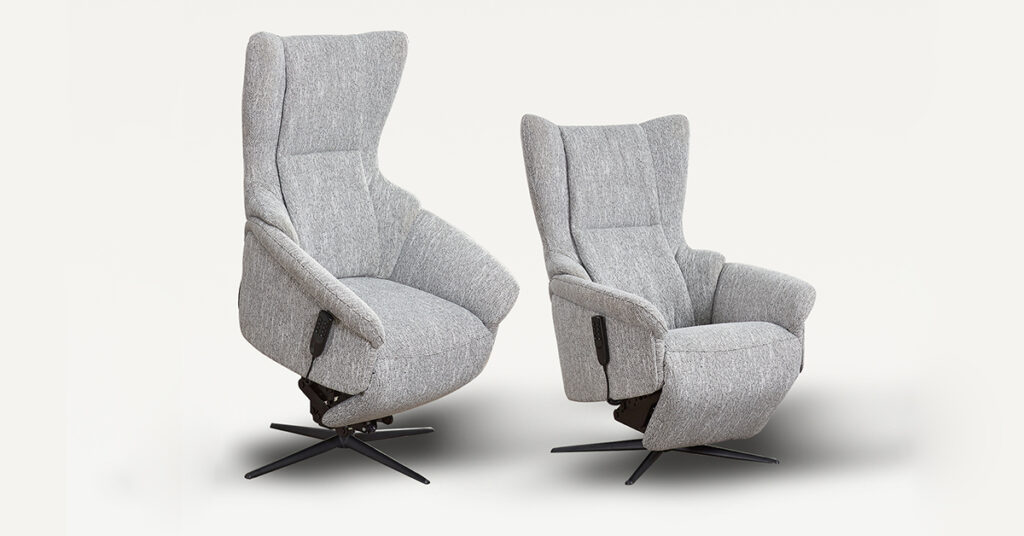
A safety dimension specific to power recliner sleep and vulnerable users
Moreover, power recliners add a mechanical risk layer that manual chairs do not. Coroner reports and occupational therapy guidance from Ontario describe fatal cases. Elderly individuals with cognitive decline activated the lift mechanism themselves. They elevated into a standing position they could not safely manage. Then they fell. The chair’s power-assisted lift is designed to help. However, it becomes a hazard when the user’s judgment or physical stability does not match the chair’s capability.
Ultimately, the practical implication is not “avoid power recliners.” The safety of recliner sleep depends on the match between the user and the chair’s controls. For a cognitively intact adult using the chair for reflux, the mechanical risk is manageable. But for a frail older adult sleeping in a power recliner overnight, the risk profile changes. Lockout controls, caregiver supervision during transfers, and a plan for repositioning must become part of the decision. They are not optional extras.
When does power recliner sleep make sense?
On one hand, the evidence supports recliner sleep as a targeted, time-limited intervention. It makes sense when there is a specific problem that a semi-upright position addresses. For example, nighttime reflux that has not responded to bed elevation. It also helps mild or positional OSA as an adjunct to other strategies. Another example is a short post-surgical window when flat sleeping is painful. Breathing-related orthopnea that improves with head elevation is another valid reason. In these cases, the recliner does identifiable work. Therefore, set the angle to do that work—roughly 30–45° for reflux and post-surgical comfort. Do not set it fully reclined or bolt upright.
When should power recliner sleep end?
On the other hand, it stops making sense when the user sleeps in the recliner every night for weeks. This happens without a plan to return to a flat surface. At that point, the venous, pressure, and postural risks accumulate. The recliner is no longer a treatment tool. Instead, it becomes a substitute sleep environment with known costs. Therefore, the better long-term option for many people is an adjustable bed base. It provides head elevation while allowing the legs to raise above heart level. This addresses the reflux or breathing problem without the legs-down constraints of a chair.

Ultimately, the honest version of the evidence is this. Power recliner sleep can be legitimate for a specific reason, for a specific period of time. It is not a bed replacement. People usually run into trouble when they start with a good reason. However, they never revisit the decision once the reason resolves.