
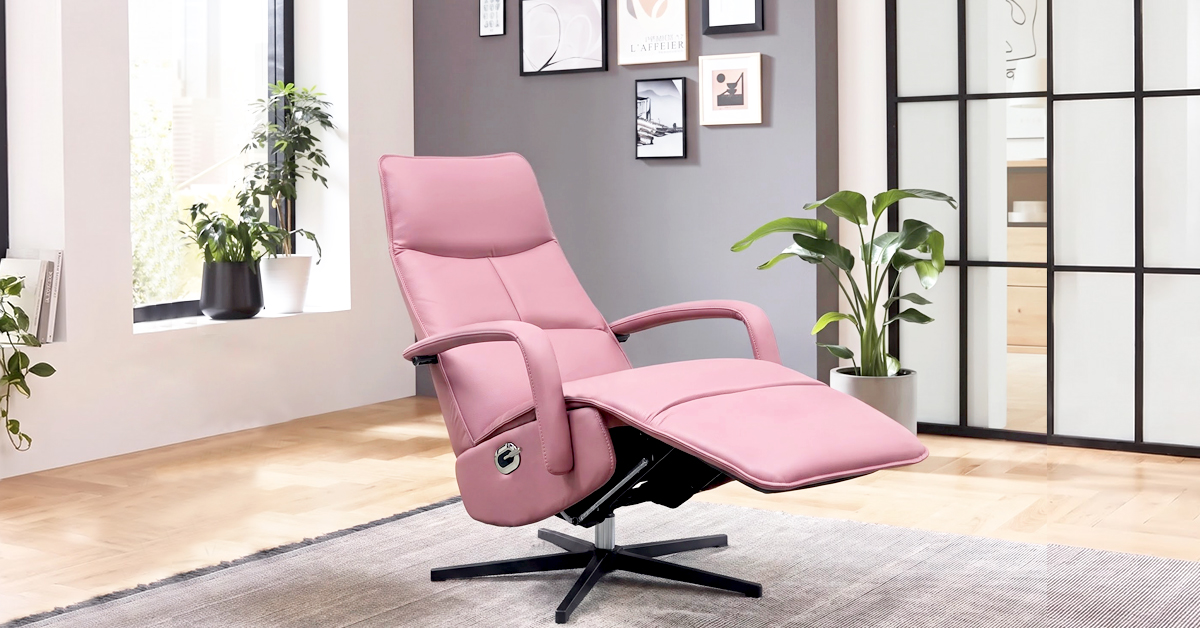
What Production Standards Really Mean for a Modern Manual Recliner
A buyer once asked why two chairs with the same silhouette could feel completely different after six months of use. The answer lies in the production standards of a Modern Manual Recliner. The backrest lost its tension, the side handle became stiff, the solid wood armrests cracked, and the foam flattened. The difference was not in the design sketch; it lay in production standards.
Traditional American-style recliners rely on heavy exposed steel linkages and thick serpentine springs. Modern manual recliners (like our sleek, high-back design with solid wood armrests) use a concealed side-handle mechanism. When the user pulls the metal handle, an internal cable releases the lock, allowing the backrest to recline. For this modern chair, production standards determine how smoothly the handle pulls, how long the internal cable and return spring last, and how consistently the chair performs after repeated use.
Before discussing specific measurements, it helps to understand how mechanism choice affects comfort and durability. Our modern manual recliner mechanism guide explains the trade-offs between friction hinges and pull-handle systems. The same logic applies to production standards: each mechanism type requires completely different tolerances and testing.
Frame Construction and Solid Wood Armrests
The frame is the skeleton of a Modern Manual Recliner, but the solid wood armrests and the metal swivel base are the most visible quality indicators. Export-grade lounge chairs commonly use engineered wood (plywood) with a moisture content between 8 and 12 percent for the curved backrest. The plywood used in the curved shells should be at least 12 mm thick and hot-pressed to prevent delamination.
The wooden armrests must be made from kiln-dried hardwood (such as rubberwood or walnut) with a moisture content of 8–12% to prevent cracking in dry climates. The joint between the wood armrest and the upholstered frame must use heavy-duty metal brackets, not just staples. A simple bench test is to grip the wooden armrest and try to rock the chair; a weak joint will creak or flex before the mechanism even moves. At the production level, frames are tested with a static load of at least 100 kg on the seat before upholstery is applied.
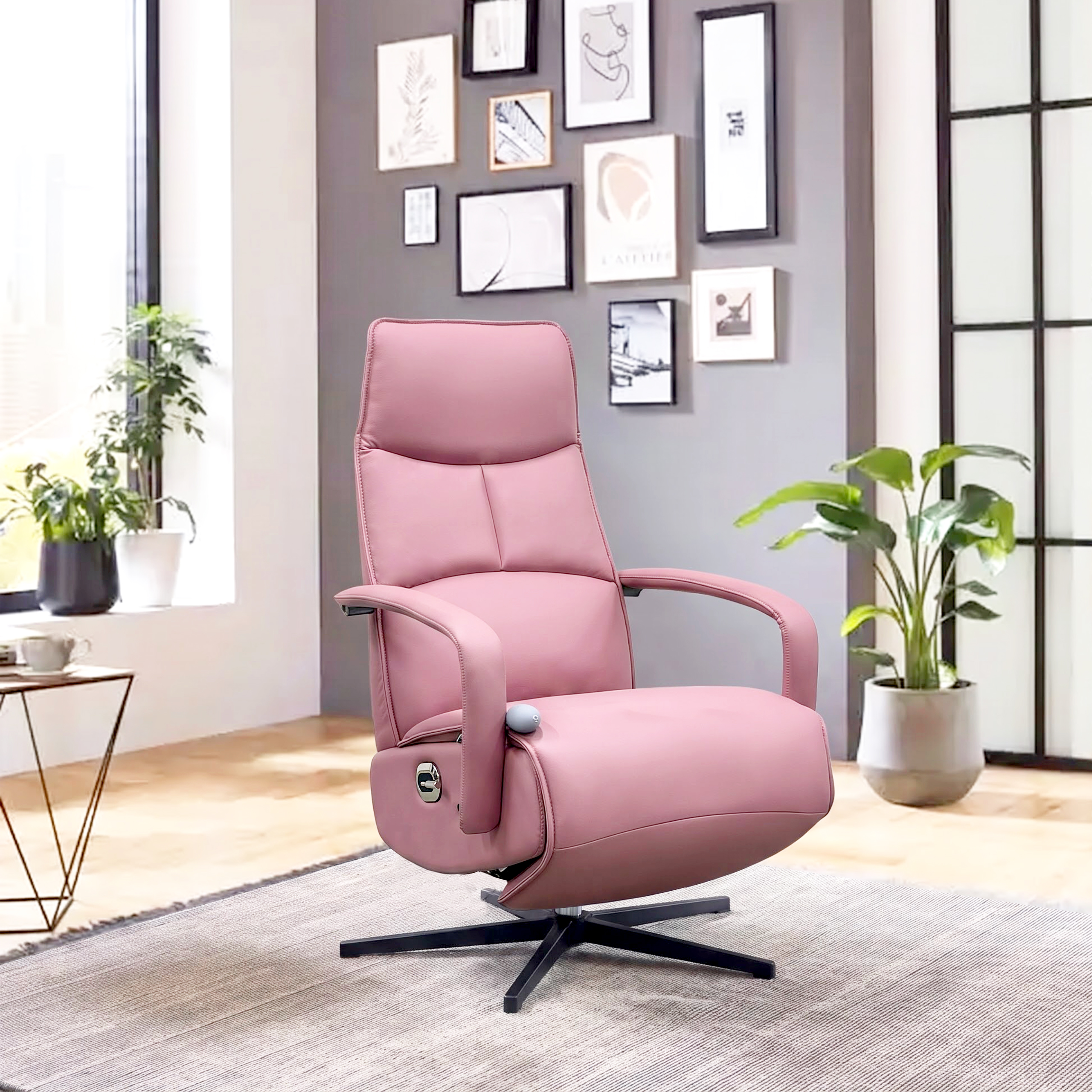
Modern Manual Swivel Recliner KM6113SD
Featuring a sleek, minimalist silhouette, this manual lounge chair is equipped with a concealed side toggle and a heavy-duty 360° swivel base. Upholstered in premium fabric with high-density molded foam, it perfectly balances modern aesthetics with commercial durability. Available in various custom colors.
View Product →Reclining Mechanism and Pull-Handle Hardware
As seen in the product design, this recliner uses a chrome-plated oval bezel and a metal pull handle. This handle pulls a heavy-duty inner cable or mechanical linkage to release the recline lock. The steel gauge, cable tension, and return spring design define the feel and lifespan.
Production Standards: The handle mechanism must be tested against recognized durability standards. While complete recline mechanisms are often tested to 50,000 cycles (e.g., ANSI/BIFMA X5.1 requires 300,000 cycles for heavy commercial use), the pull-handle and internal cable assembly should undergo at least 50,000 to 80,000 pull cycles to ensure the cable doesn’t snap and the handle return spring doesn’t fail. The return spring (torsion spring) must be fatigue-rated so the backrest returns to the upright position smoothly.
The chrome bezel must be securely seated in the upholstery without sharp edges. Bolts and rivets inside the linkage should be zinc-plated or stainless to avoid corrosion after shipping, especially for coastal or RV use. A product such as our modern manual fabric swivel recliner with solid wood armrests still has to meet these rigorous mechanism requirements before it is offered to wholesale buyers.
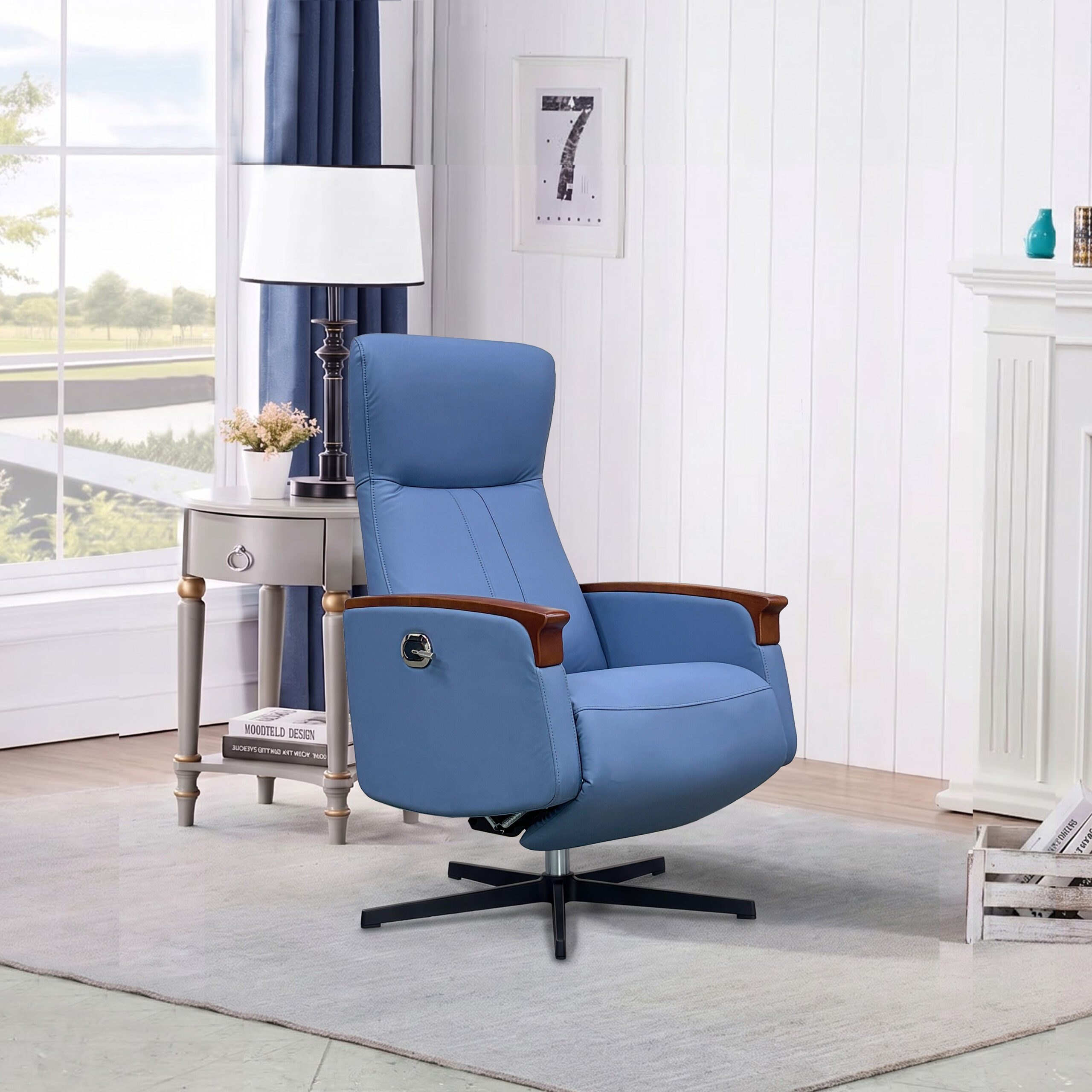
Manual Recliner Chair KM6058SD
This manual swivel recliner features a concealed side lever, adjustable backrest (0-15°), and a smooth 330° swivel base. Upholstered in premium cow top leather with high-density moulding foam, it supports up to 150kg. Certified with BSEN12520, BSEN13759, and CE.
View Product →Foam, Fabric, and Comfort Retention
Seat foam is the component that fails most visibly in a low-cost Modern Manual Recliner High-resilience polyurethane foam with a density of 25–35 kg/m³ is a common baseline for seat cushions, while backrest foam can be slightly softer. Because the backrest in this design relies on a thinner profile, the foam must maintain a minimum 90% recovery after compression; otherwise, the cushion will develop a permanent hollow.
Fabric performance matters too. The upholstery features double-stitched seams. A standard abrasion requirement is 30,000 Martindale cycles for household upholstery, and 50,000 cycles for heavier commercial use. Since this modern style has minimal seams, tight stitching, consistent thread tension, and precise pattern alignment are critical to maintaining its sleek, premium look.
The table below summarizes the key production parameters that a factory should be able to document for this modern manual recliner.
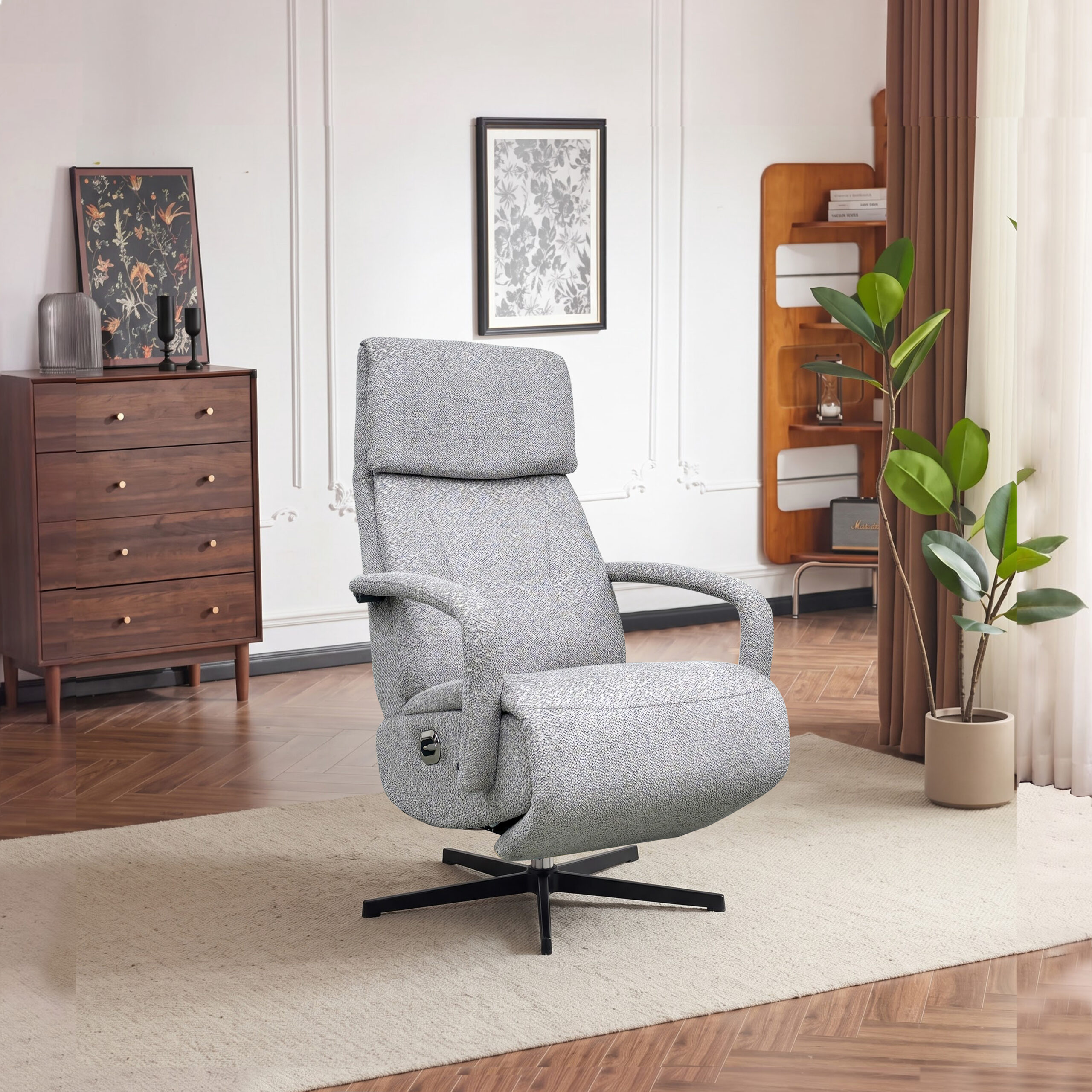
Manual Recliner Chair KM6112SD
This high-back manual recliner features a discreet side lever for effortless footrest and backrest adjustment. Equipped with a 0-15° adjustable backrest, a smooth 330° swivel base, and high-density moulding foam, it supports up to 150kg. Certified with BSEN12520, BSEN13759, and CE, with customizable upholstery options including cow top leather, TPU, and fabric.
View Product →Table 1. Modern manual recliner production parameters buyers should confirm with suppliers.
| Component | Recommended Standard | Why It Matters |
|---|---|---|
| Solid Wood Armrests | Kiln-dried hardwood, 8–12% moisture, metal brackets | Prevents cracking and ensures structural integrity |
| Seat Foam | 25–35 kg/m³ density, high resilience, ≥90% recovery | Reduces sagging and maintains comfort |
| Reclining Mechanism | Pull-handle, 50,000+ cycle test for cable/spring | Confirms angle control and smooth manual operation |
| Upholstery Fabric | Abrasion resistance ≥30,000 Martindale cycles, double-stitched | Predicts wear and maintains premium appearance |
The Manufacturing Process Behind Consistent Recliners
Standards only become meaningful when the production line follows them. In an export furniture factory producing a Modern Manual Recliner, quality control starts when raw material arrives and does not end until the container is loaded.
Incoming material inspection: Every batch of fabric, foam, plywood, and solid wood armrests should be checked against a reference sample. Wood is checked for moisture content; foam is measured for density and Indentation Force Deflection (IFD); the chrome handle bezels are inspected for scratches.
Cutting, sewing, and assembly tolerances: Upholstery panels are cut with a tolerance of plus or minus 2 mm. Double-stitched seams are reinforced. During the assembly of every Modern Manual Recliner, workers test the pull-handle before the backrest is fully attached to ensure the cable pulls freely and the recline angle falls within the specified range. The solid wood armrests are precisely aligned and screwed into the metal brackets. Torque settings on bolts are controlled so the frame remains tight during transport.
Function testing and finished-goods inspection: Before packing, each manual recliner should receive a function check: pull-handle operation, return action, and stability on level ground. Random samples are then pulled for weight-load tests and packaging drop tests. The goal is not to make one chair that works, but to make every chair in the container behave the same way. This is where production standards create real commercial value: fewer customer complaints, fewer returns, and fewer chargebacks.
KD, packaging, and shipping: Modern recliners exported in bulk are often designed as semi-KD (knock-down) units, where the metal base is detached to reduce freight volume. Every bracket and bolt hole must be precisely aligned so the end user can assemble the chair without forcing parts. Packing must include heavy-duty edge protectors for the solid wood armrests to prevent dents or scratches during transit. A carton drop test simulating a one-meter drop is required. A chair that passes a function test but arrives with a cracked wooden armrest is still a failure.
How a B2B Buyer Should Evaluate Production Standards
When you source a Modern Manual Recliner from overseas, production standards need to be verified before production, not discovered after a claim arrives. A written specification is useful, but it has to be backed by evidence.
Questions to ask your furniture manufacturer:
- What is the cycle test standard for the pull-handle and internal cable assembly? Can you provide the test report?
- What is the moisture content of the solid wood armrests, and how are they reinforced to the frame?
- What is the exact seat foam density (kg/m³) and IFD?
- Will the pre-production sample be made on the same line, with the same materials, as the bulk order?
- Do you perform in-process inspection and a final random inspection before shipment?
Red flags to watch for:
- A price significantly lower than the market rate, which usually means thinner wood, low-density foam, or cheap plastic internal linkage parts.
- A showroom sample where the pull-handle feels gritty (sticking), or the return spring doesn’t snap back properly.
- No access to wood moisture records or mechanism test data.
- A supplier that changes foam density or wood grade after the sample is approved.
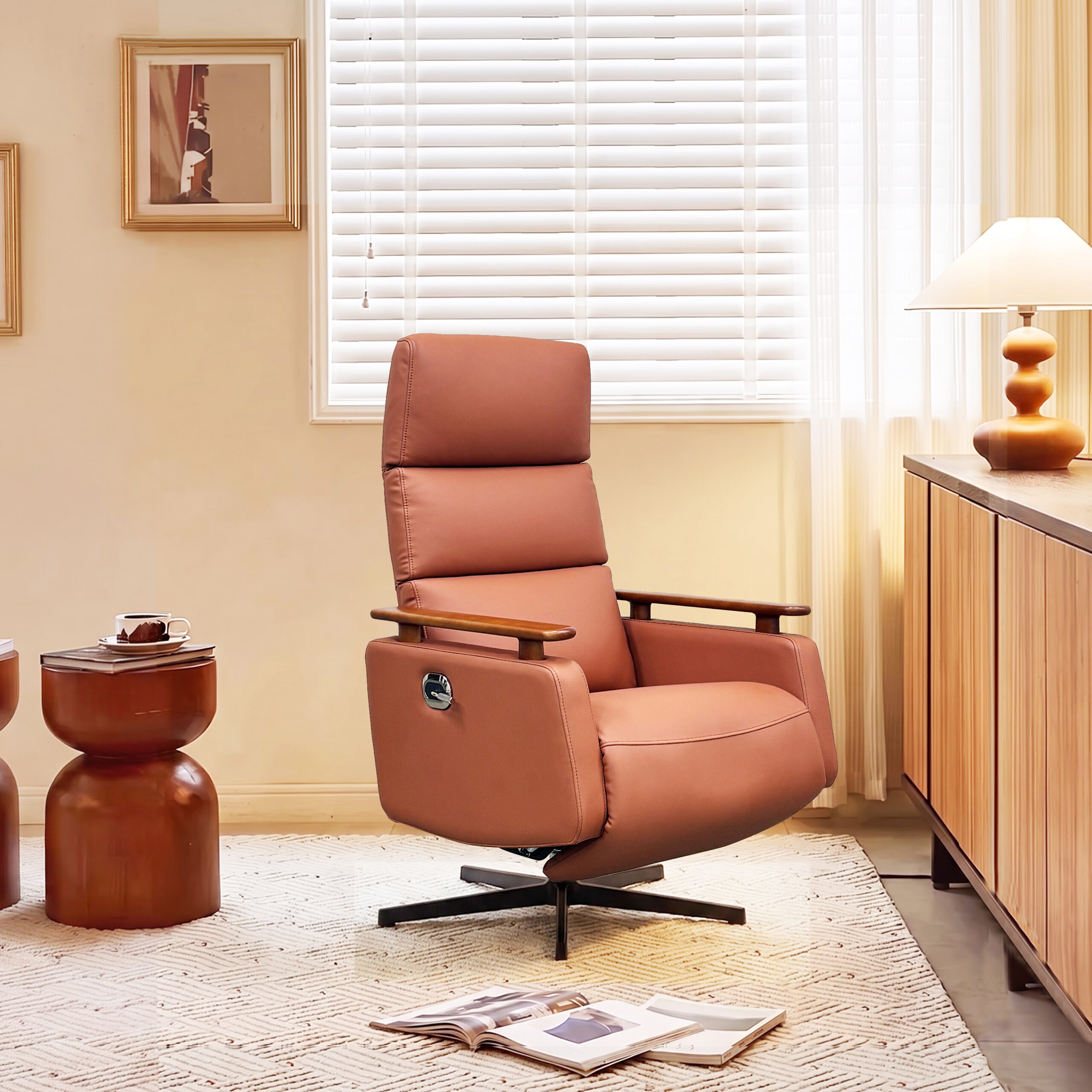
Premium Manual Recliner Chair KM6059SD
Designed for premium comfort and built to last. This manual recliner features an ergonomic design with a smooth recline mechanism, high-resilience foam, and a sturdy metal base. Available in various custom fabrics and leathers to meet your specific B2B project requirements.
View Product →Knowing the difference between a robust mechanism and a weak one helps during supplier evaluation. Many B2B buyers also use third-party inspection companies to check production against the agreed standard. A pre-shipment inspection typically covers handle function, wood armrest finish, foam density, and packaging condition. That inspection report is only useful if your order has a clear specification in the first place.
About Leader Seating
Leader Seating is a leading manufacturer of modern manual and power lounge chairs, dedicated to delivering premium seating solutions for global B2B buyers. With years of export experience, we strictly enforce these rigorous production standards—from kiln-dried solid wood frames to high-density foam and precision pull-handle mechanisms. If you are evaluating a supplier, ask for the numbers behind the product, not just the photos. Contact Leader Seating today to discuss your wholesale project or request a production sample.