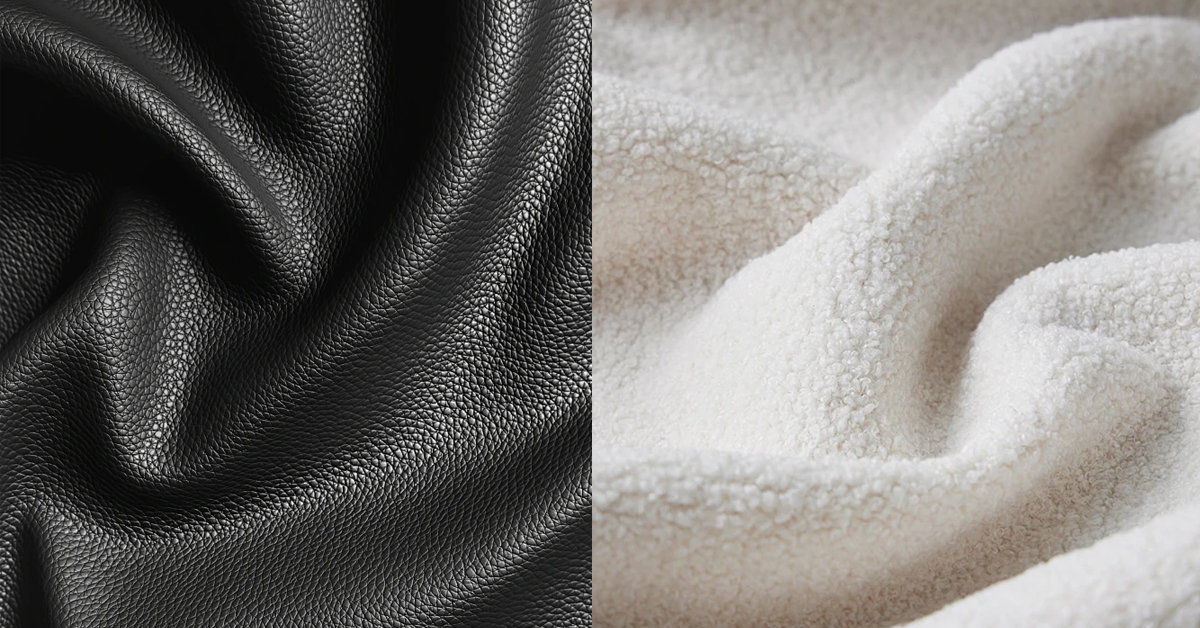
You’ve probably seen the articles comparing leather vs fabric recliner options. Leather is “luxurious.” Fabric is “cozy.” And that’s end of story.
However, if you’re actually shopping for a power recliner — something you’ll sit in every single day for years — that surface-level advice isn’t going to cut it.
Here’s the truth: most leather vs fabric recliner guides leave out the stuff that actually matters. They don’t tell you about the different types of leather. For example, They don’t mention that some fabrics outlast cheap leather. Similarly, they don’t mention that some fabrics outlast cheap leather. And they definitely don’t warn you about the downsides
So let’s skip the fluff. Here’s the real pros and cons of leather vs fabric recliners — including the things no one tells you.
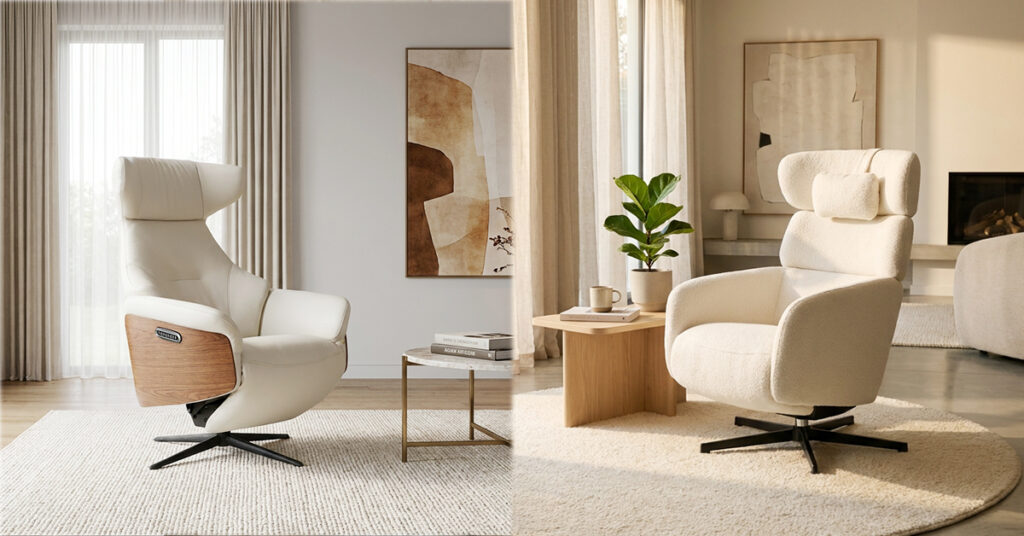
Leather Recliner Pros and Cons: What They Don’t Tell You
The Pros
1. It lasts — if you get the right kind
To begin with, a high-quality leather recliner can easily last 15 to 20 years with proper care. Good leather — top-grain or full-grain — resists wear, develops a beautiful patina over time, and actually looks better as it ages. Cheap leather? However, that’s a different story. We’ll get to that.
2. Spills wipe right off
First of all, unlike fabric, leather doesn’t absorb liquids easily. Coffee, wine, juice — you wipe it up with a cloth and move on. Pet hair? Slides right off. As a result, if you have kids or pets, this alone can save your sanity.
3. It stays put
Leather’s firm surface holds its shape better over time. On the other hand, fabric can stretch with frequent use, but leather keeps power recline components aligned and the mechanism working smoothly. In addition, the firmer surface also provides solid back and lumbar support.
4. Timeless style
Leather works in almost any interior — modern, traditional, industrial, you name it. Moreover, it doesn’t go out of fashion.
The Cons (The Ones No One Tells You)
1. “Leather” isn’t one thing
Here’s what most guides won’t tell you: not all leather is created equal.
- Top-grain / full-grain — This is the real deal. Durable, breathable, ages beautifully.
- Genuine leather — Lower grade, made from the remaining layers after the top is stripped off. Less durable.
- Bonded leather — This is the trap. It’s made from leather scraps mixed with adhesives and pressed into sheets. It looks like leather at first, but it peels and cracks within a few years. Many “leather” recliners at lower price points use bonded leather on the sides and back, with only the seating area in real leather.
If you’re buying a leather recliner under $800, ask what kind of leather you’re actually getting. [Learn more about our leather recliners →]
2. Temperature swings are real
Leather feels cool in winter and can get warm — even sticky — in summer. In humid conditions without good air circulation, it becomes less comfortable. If you live in a hot climate, this is a genuine daily annoyance.
3. It shows scratches
Pets with claws, kids with toys, belt buckles — leather shows marks. Unlike fabric, you can’t “fluff out” a scratch. And once it’s there, it stays.
4. Maintenance is non-negotiable
Leather requires conditioning 2 to 4 times per year to prevent drying and cracking. Skip it, and your “investment” starts looking tired fast. You also need to keep it out of direct sunlight, which causes fading.
5. The price tag
Leather recliners typically cost 2 to 3 times more than comparable fabric models. You’re paying for longevity — but only if you get the right grade and maintain it.
Fabric Recliner Pros and Cons: What They Don’t Tell You
The Pros
1. Comfort from day one
Fabric recliners feel softer and cozier immediately. There’s no “breaking in” period. You sink in, and it contours to your body.
2. Breathability is a game-changer
Fabric allows air to circulate, preventing heat buildup. In warm weather, this makes a huge difference for long sitting sessions. You won’t get that sticky feeling against your skin.
3. Endless variety
Fabric comes in hundreds of colors, patterns, and textures. Want a bold pattern? A specific shade of teal? A textured weave? Fabric gives you options leather never can.
4. Better with pets (sometimes)
Here’s a surprise: fabric often handles pet scratches better than leather. While leather shows permanent scratches, fabric fibers can recover. Pet fur does weave into the fibers, but performance fabrics are engineered to resist this.
5. More budget-friendly
Fabric recliners satisfy a wider range of budgets. You can get excellent comfort and durability at a much lower price point than premium leather.
The Cons (The Ones No One Tells You)
1. Stains are your new enemy
Unfortunately, fabric absorbs spills. Red wine, coffee, pet accidents — they soak in fast. Although some fabrics have removable, washable covers, many don’t. And once a stain sets, it’s often permanent.
2. It doesn’t last as long
To begin with, a quality fabric recliner typically lasts 7 to 12 years. That means it’s shorter than good leather’s 15–20 years. Furthermore, over time, fabric can pill, fade, and show wear in high-traffic areas.
3. Cleaning is a project
To start with, regular vacuuming is required to keep dust and grime from embedding in the fibers. Similarly, spills need immediate attention. In fact, deep cleaning often requires professional help or renting equipment.
4. It can stretch
Fabric may stretch slightly with frequent use, which can affect how well the recliner mechanism aligns over time. Nevertheless, this is less of an issue with high-quality, tight-weave fabrics, but it’s worth knowing.
5. “Performance fabric” isn’t magic
Nowadays, many recliners come with “performance fabric” — engineered textiles with stain-resistant coatings. Although they’re better than standard fabric, they’re not indestructible. For example, the coating can wear off over time, and abrasion resistance varies widely by product.
Leather vs Fabric Recliner: Side-by-Side Comparison
Image 2 – Suggested Visual
Suggested image: A clean comparison table infographic showing leather vs fabric across 6 key factors (lifespan, cost, cleaning, comfort, pets, temperature).
Alt text:
leather vs fabric recliner comparison table infographic
| Feature | Leather Recliner | Fabric Recliner |
|---|---|---|
| Lifespan | 15–20 years (top-grain) | 7–12 years (quality fabric) |
| Upfront Cost | 2–3x higher | More affordable |
| Cleaning | Wipe spills, condition 2–4x/year | Vacuum regularly, spot-clean stains |
| Comfort | Firm, supportive, temperature-sensitive | Soft, cozy, breathable |
| With Kids/Pets | Wipes clean, shows scratches | Handles scratches better, absorbs stains |
| Style Variety | Limited (classic colors) | Endless (colors, patterns, textures) |
| Temperature | Cool in winter, warm/sticky in summer | Breathable year-round |
The Honest Bottom Line
Here’s the decision framework no one gives you when choosing between a leather vs fabric recliner:
Choose leather if:
- You’re willing to spend more upfront for 15+ years of use
- You want easy wipe-clean surfaces for spills and pet hair
- You like a firm, supportive seat
- You live in a climate-controlled home (not too hot, not too humid)
- You’ll actually condition it twice a year
Choose fabric if:
- You want a softer, cozier feel from day one
- You love having color and pattern options
- You have pets that scratch (fabric hides it better)
- You live in a warm climate and want breathability
- You’re on a tighter budget
And whatever you do:
- If you buy leather, ask what grade it is. Top-grain? Genuine? Bonded? If they can’t tell you, walk away.
- If you buy fabric, ask about the weave and coating. Tight weaves and performance finishes last longer.
In the end, both materials can be great. However, both can be terrible. Ultimately, the difference isn’t leather vs fabric — instead, it’s quality vs cheap.
Not sure about other recliner features? Read our guide: [Power Lift Recliner Buying Guide 2026 →]