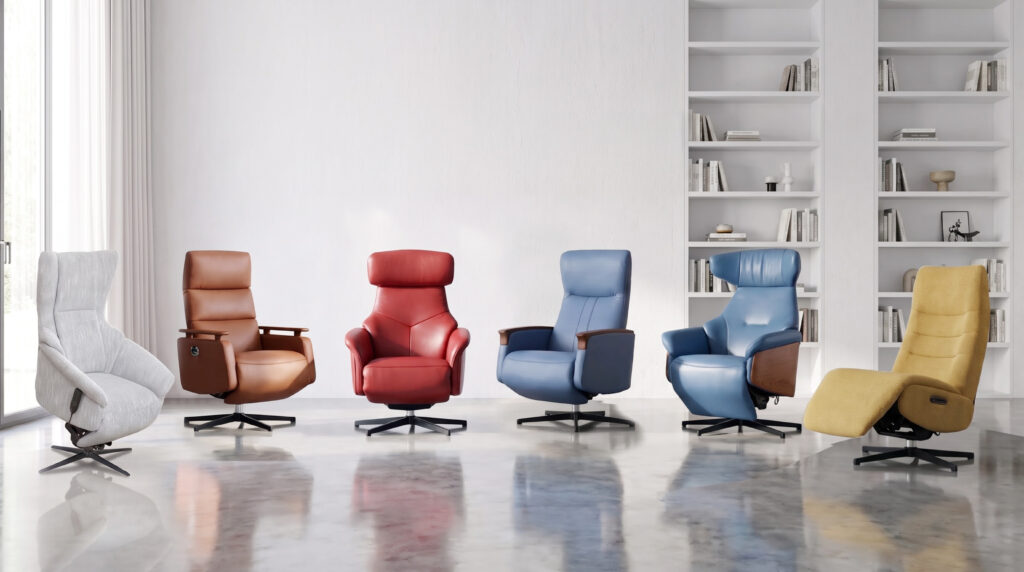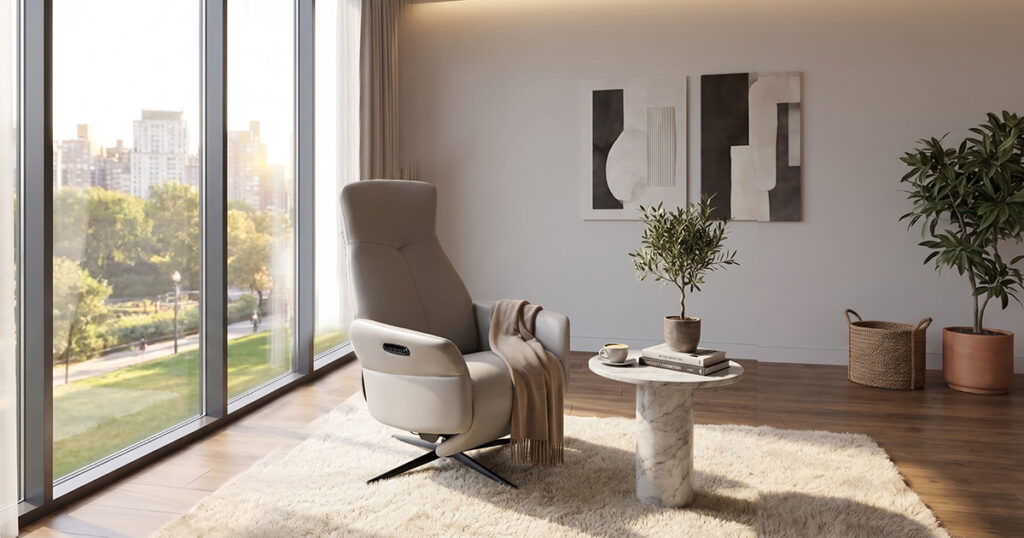
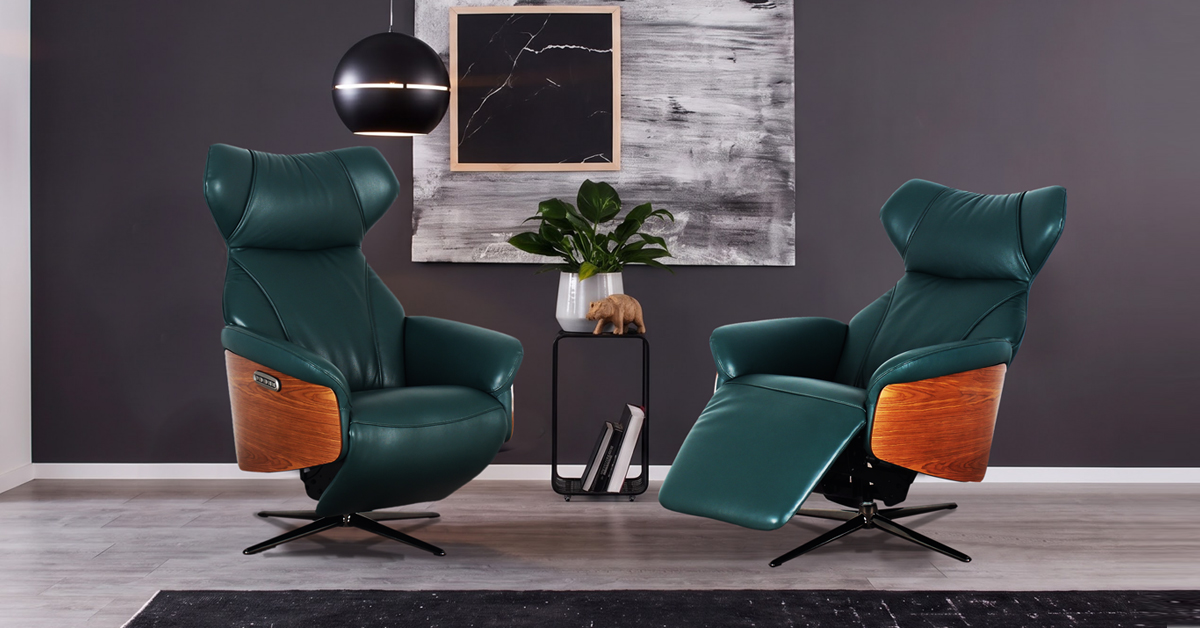
Choosing a relax chair is not only a question of upholstery, ergonomics, and mechanism. The visible wood frame strongly influences the chair’s visual weight, perceived quality, maintenance requirements, and long-term compatibility with the interior. Oak and walnut are two of the most frequently specified hardwoods in premium furniture—and two of the most directly compared. Both are durable, dimensionally stable, and suitable for high-quality lounge chairs or recliners. However, they differ significantly high-quality
However, they differ significantly in color, grain character, room impact, finish options, price positioning, and maintenance profile.
This guide provides a professional comparison to help you select the right wood species for your relax chair.
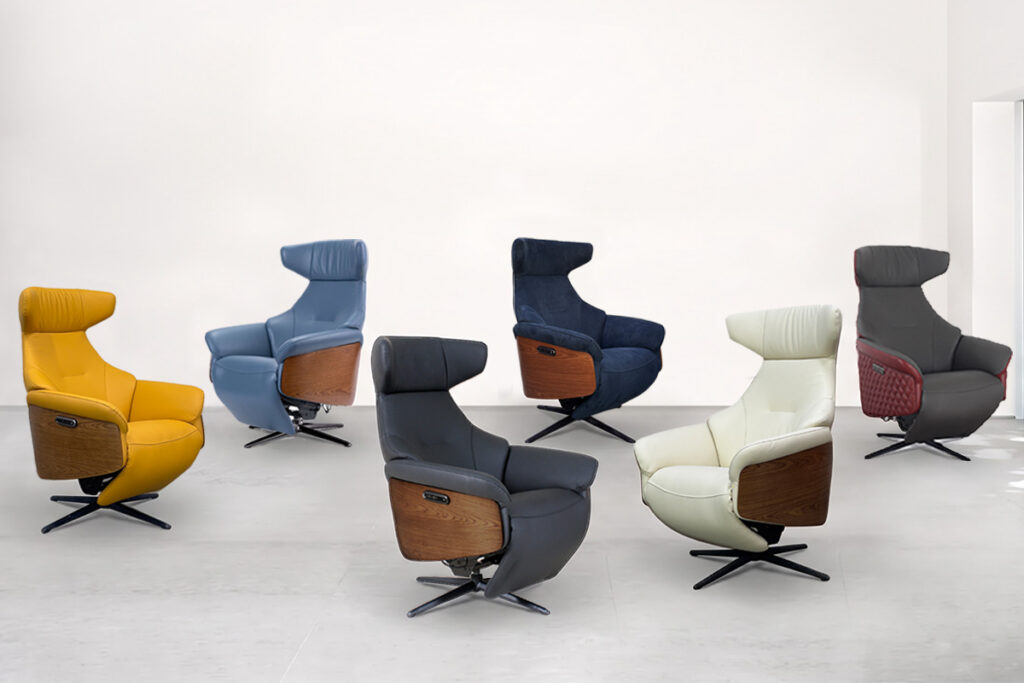
Key Takeaways
- Oak is harder, more wear-resistant, and more versatile in finish options. It suits Scandinavian, modern, natural, and family-oriented interiors.
- Walnut offers a warmer, more exclusive appearance with a distinctive grain. It suits classic, elegant, design-led, and premium interiors.
- Black-stained oak is usually darker than walnut. Walnut remains warmer and browner in tone.
- Finish matters as much as species. Lacquered oak is the most practical choice for high-use households; oiled or natural oak requires more care.
- Walnut is often used as veneer in furniture. This is not a defect—quality depends on substrate, edge detailing, and finish quality.
Why the Wood Species Matters in a Relax Chair
In a relax chair, the wooden frame is both a structural and an aesthetic component. It affects:
- Visual harmony with flooring, tables, and cabinetry
- Perceived value and design language
- Wear resistance at armrests, legs, and exposed edges
- Maintenance intensity in daily use
- Color stability under natural and artificial light
https://fsc.orgOak and walnut are both hardwoods, but they are not interchangeable. Oak is generally harder and more abrasion-resistant; walnut is generally softer but offers a more premium visual character and warmer tone.
Oak: The Versatile Option for a Relax Chair
Oak is one of the most widely used hardwoods in furniture manufacturing. It is valued for its hardness, wear resistance, pronounced grain, and excellent finishing potential. For a relax chair, three finish directions are particularly relevant.
Natural Oak
Natural or untreated oak showcases the wood’s open grain and warm, light-to-medium brown tone. It creates a natural, Scandinavian, and airy atmosphere and pairs well with light floors, neutral textiles, and greenery.
Advantages: authentic appearance, pleasant tactile feel, timeless natural character.
Considerations: more sensitive to moisture, grease, and stains; spills should be removed promptly. Maintenance typically involves a dry or slightly damp cloth and periodic care with a suitable wood care product.
Lacquered Oak
Lacquered oak combines the visual warmth of oak with a protective surface. The grain remains visible but appears calmer and more uniform. The surface is smoother and more resistant to everyday wear.
Advantages: high abrasion resistance, protection against stains, easy cleaning.
Best for: family households, high-traffic living areas, and buyers who prioritize low maintenance.
Care: dust regularly with a soft cloth; wipe occasionally with a damp, well-wrung cloth; avoid aggressive cleaners.
Black-Stained Oak
Black-stained oak is a popular choice for contemporary design furniture. The stain darkens the wood while preserving the natural grain pattern, creating a visually striking surface that is more lively than a solid black paint finish. It delivers strong contrast and a modern, design-oriented look.
Advantages: elegant modern appearance, visible grain structure, strong visual impact.
Considerations: dust is slightly more visible on dark surfaces; black-stained oak is typically darker than walnut.
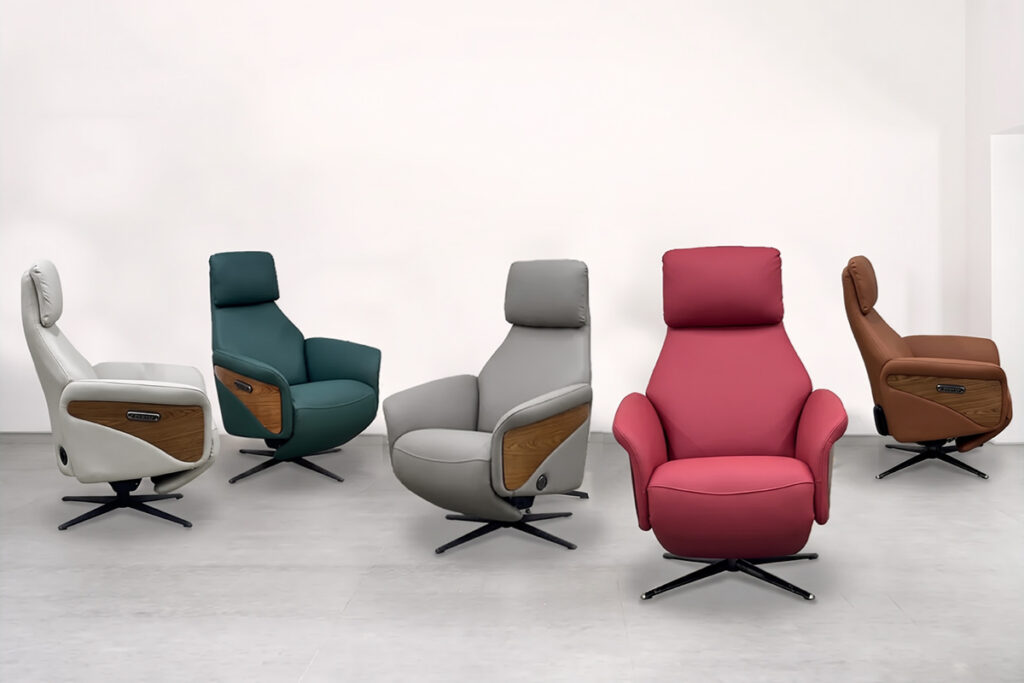
Walnut: The Premium Wood for a Relax Chair
Walnut is a classic premium hardwood. Its color ranges from warm brown to chocolate brown, sometimes with reddish undertones. The grain is often lively, wavy, or subtly striped. This combination gives walnut furniture a warm, exclusive, and unmistakable character.
Room Impact
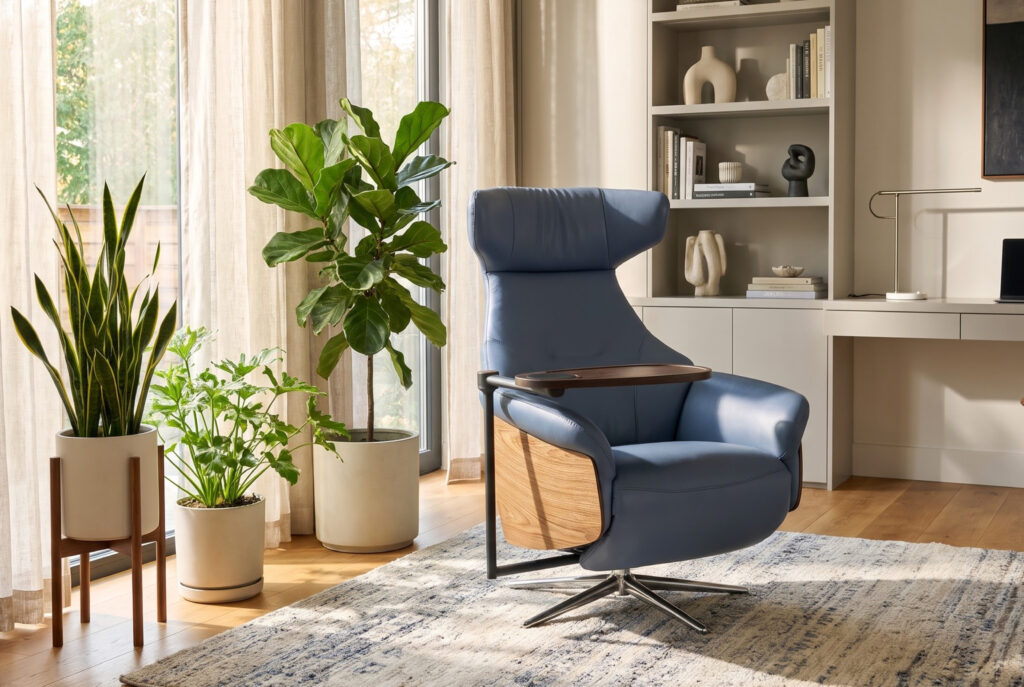
A walnut relax chair communicates warmth, exclusivity, and timeless elegance. It works particularly well in premium residential interiors, classic settings, modern design concepts, and rooms with cream, beige, dark green, anthracite, or natural textile palettes.
Advantages and Maintenance
Advantages: premium appearance, distinctive grain, warm color, timeless design compatibility.
Maintenance: relatively low. Dust regularly and clean with a slightly damp cloth. Avoid prolonged direct sunlight to preserve color and grain appearance.
Note on veneer: Walnut is frequently used as veneer because high-quality solid walnut is limited and expensive. For relax chairs, this is not a disadvantage. Veneered construction can offer excellent stability and consistent appearance. The key quality factors are substrate quality, edge detailing, veneer thickness, and finish.
Direct Comparison: Oak vs. Walnut for Your Relax Chair
| Criterion | Oak | Walnut |
|---|---|---|
| Color | Light to medium brown; can be stained black | Warm brown to chocolate brown, sometimes reddish |
| Grain | Pronounced, structured, clear | Lively, wavy, sometimes striped |
| Hardness | Generally harder and more wear-resistant | Softer than oak but sufficiently durable for furniture |
| Room effect | Open, natural, friendly, versatile | Warm, exclusive, representative |
| Maintenance | Low to moderate depending on finish | Low to moderate |
| Price level | Moderate to upper-mid | Upper-mid to high |
| Typical styles | Scandinavian, modern, natural | Classic, elegant, design-oriented |
| Best for | Family homes, bright rooms, versatile interiors | Premium interiors, warm color schemes, design-led spaces |
| Watch-outs | Natural oak requires more care | Darker tone may limit very light interiors |
How to Choose a Relax Chair: A Practical Framework
1. Assess the Room’s Light and Scale
Light oak visually expands small or dark rooms and supports a fresh, airy atmosphere. Walnut adds warmth and visual weight; it works best in well-lit, medium-to-large rooms or as a deliberate contrast in minimalist interiors.
2. Match the Interior Style
- Scandinavian / natural / modern light: natural oak or lacquered oak
- Contemporary / high-contrast / design-led: black-stained oak or walnut
- Classic / elegant / premium: walnut
- Family-oriented / high-use: lacquered oak
3. Consider Household Intensity
For households with children or pets, lacquered oak is usually the more pragmatic choice due to its protective surface. Walnut remains durable, but exposed edges and natural finishes require more careful use.
4. Compare Finish, Not Only Species
A high-quality lacquered oak chair may be more practical than an oiled walnut chair. Conversely, a well-finished walnut veneer can outperform a poorly finished solid oak frame in both appearance and stability.
5. Check Sustainability and Indoor Air Quality
For professional specification, confirm:
- FSC or PEFC certification for responsible sourcing
- Low-VOC lacquers, oils, and adhesives
- Formaldehyde emission class where applicable
- Repairability of the finish
6. Validate Color Under Real Lighting
Wood color changes under daylight, warm artificial light, and LED lighting. Always compare physical samples or request real-life photos before finalizing a walnut or oak relax chair.
Recommended Relax Chair Selection by Scenario
| Scenario | Recommended Wood |
|---|---|
| Bright Scandinavian living room | Natural oak or lacquered oak |
| Modern minimalist interior with strong contrast | Black-stained oak |
| Classic elegant living room | Walnut |
| Family household with daily use | Lacquered oak |
| Design-led premium lounge area | Walnut |
| Natural, eco-conscious interior | Natural oak with certified finish |
FAQ
Is walnut darker than black-stained oak?
No. Black-stained oak is usually darker. Walnut is warm brown and generally lighter in appearance than black-stained oak.
Which wood is more durable for a relax chair?
Oak is generally harder and more wear-resistant. However, finish quality and construction quality also strongly influence durability.
Which is easier to maintain: oak or walnut?
Lacquered oak is the easiest to maintain. Natural oak and walnut require similar routine care: dusting and occasional wiping with a damp cloth.
Does walnut suit modern interiors?
Yes. Walnut is widely used in modern design furniture and pairs well with clean lines, neutral textiles, and premium materials.
Is solid walnut necessary for a high-quality relax chair?
Not necessarily. High-quality walnut veneer can be an excellent choice. The critical factors are substrate quality, veneer application, edge finishing, and surface treatment.
Does wood color change over time?
Yes. Wood is a natural material and may change slightly with light exposure and aging. Many buyers regard this as natural patina rather than a defect.
Conclusion
There is no universally superior wood species for a relax chair—only the most suitable one for a given interior, user profile, and maintenance expectation. Oak is the more versatile, harder, and practical choice, especially in lacquered or black-stained form. Walnut is the warmer, more exclusive option, ideal for premium, classic, or design-led interiors.
For professional procurement, evaluate the wood species together with finish quality, construction, certification, and real-life color matching. The best relax chair is not simply oak or walnut—it is the one whose material, finish, and design language align with the way you use and experience your home.