You have probably heard the term “zero-gravity” in furniture ads, car commercials, and even mattress reviews. But what does it actually mean? And why is everyone suddenly talking about it?
The short answer is actually simple: Essentially, a zero-gravity recliner is a chair designed to mimic the posture your body naturally takes in space. As for the science behind it? That came straight from NASA.
So here is the full story.This zero gravity recliner guide starts with NASA’s original research.
Where It All Began: NASA and the Skylab Space Station
Indeed, this story starts in space, not in a furniture factory.
In the 1970s, NASA launched Skylab, the first US space station. While watching astronauts float in microgravity, researchers noticed something interesting. In zero gravity, the human body naturally settles into a very specific posture. Arms rise slightly. Knees bend. Hips flex. Feet point forward.
Notably, astronauts did not do this on purpose. Instead, their bodies simply defaulted to this position when gravity stopped pulling on them.
Consequently, NASA named this the Neutral Body Posture (NBP). In this position, muscles essentially don’t have to work to hold the body up. Every muscle relaxes. The spine follows its natural curve. In fact, the body basically “switches off” its constant fight against Earth’s gravity.
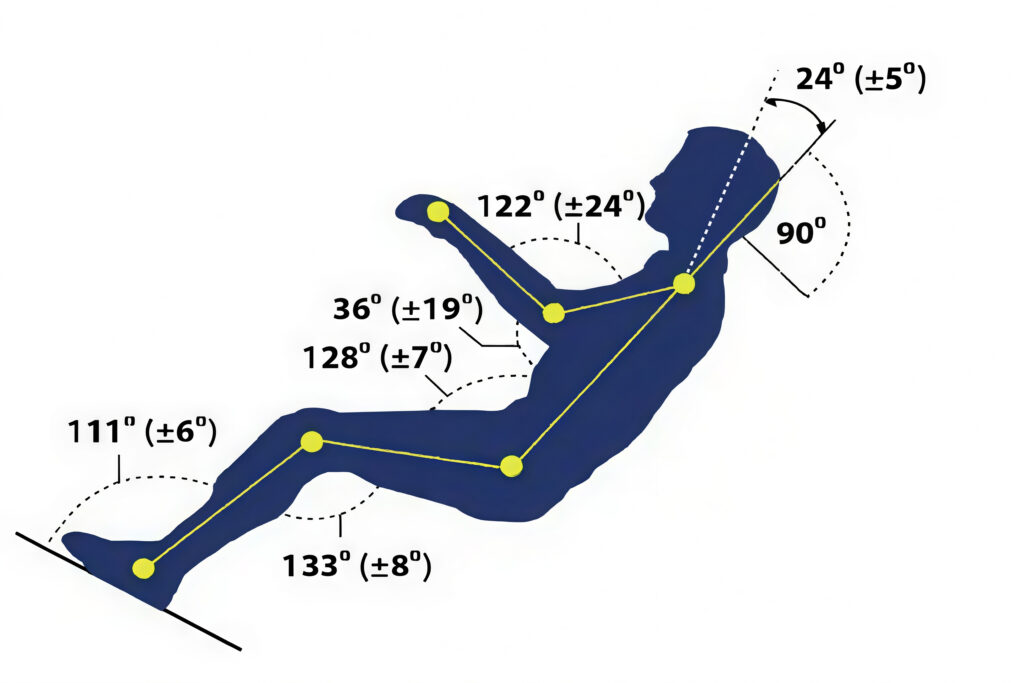
By the 1980s, NASA had fully documented the characteristics of NBP in their Man-Systems Integration Standards (MSIS).These guidelines were meant to help design spacecraft workstations. The goal was to keep astronauts comfortable and productive during long missions.
But then, something unexpected happened.
From Space to Your Living Room — A Zero Gravity Recliner Guide Explains
Furniture designers and engineers had an idea. If the NBP works for astronauts in space, maybe it is also the most comfortable posture for humans on Earth.
As it turned out, they were right.
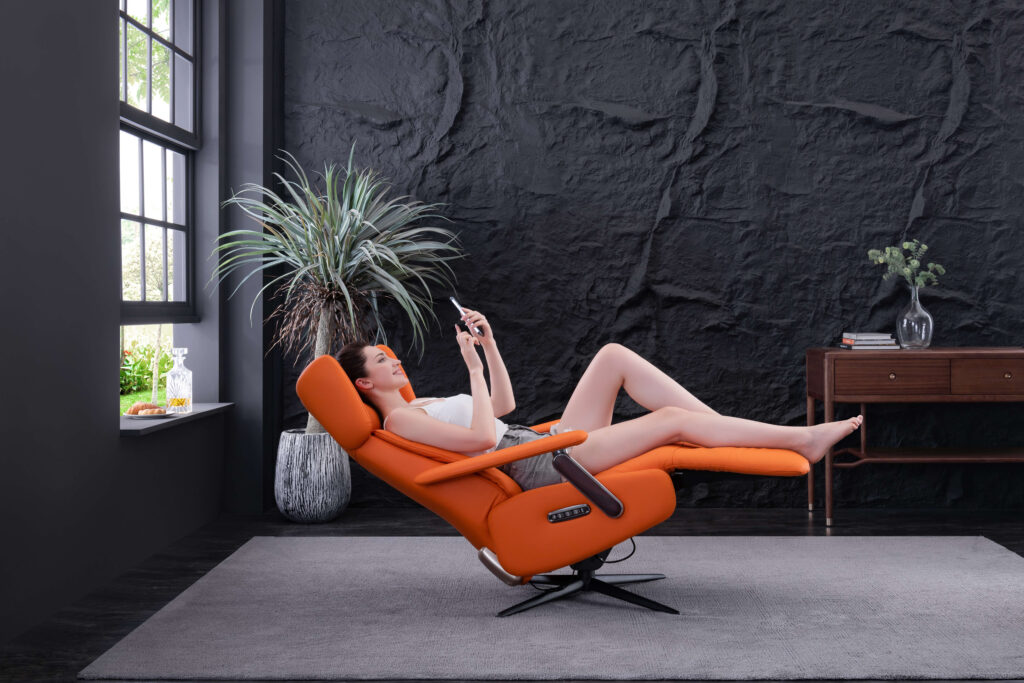
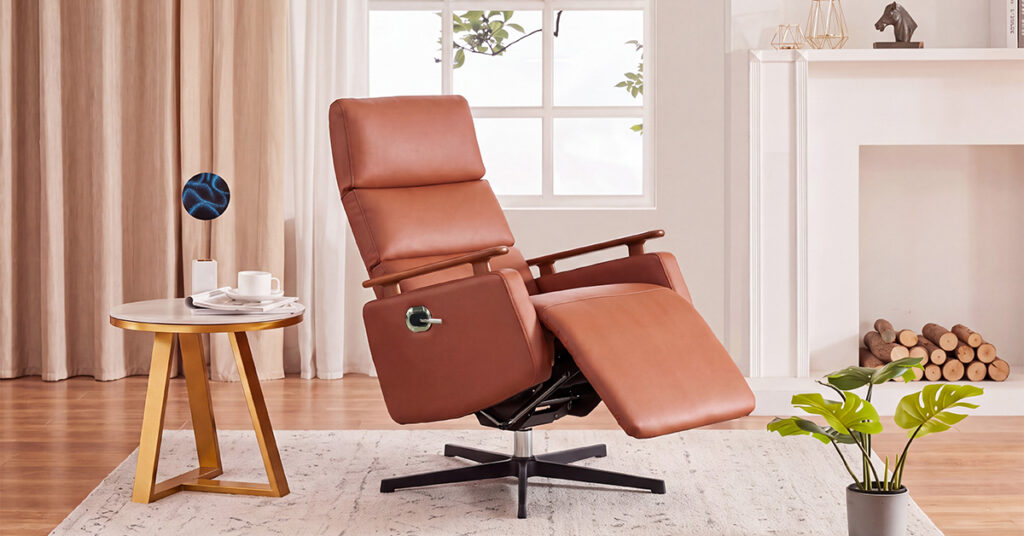
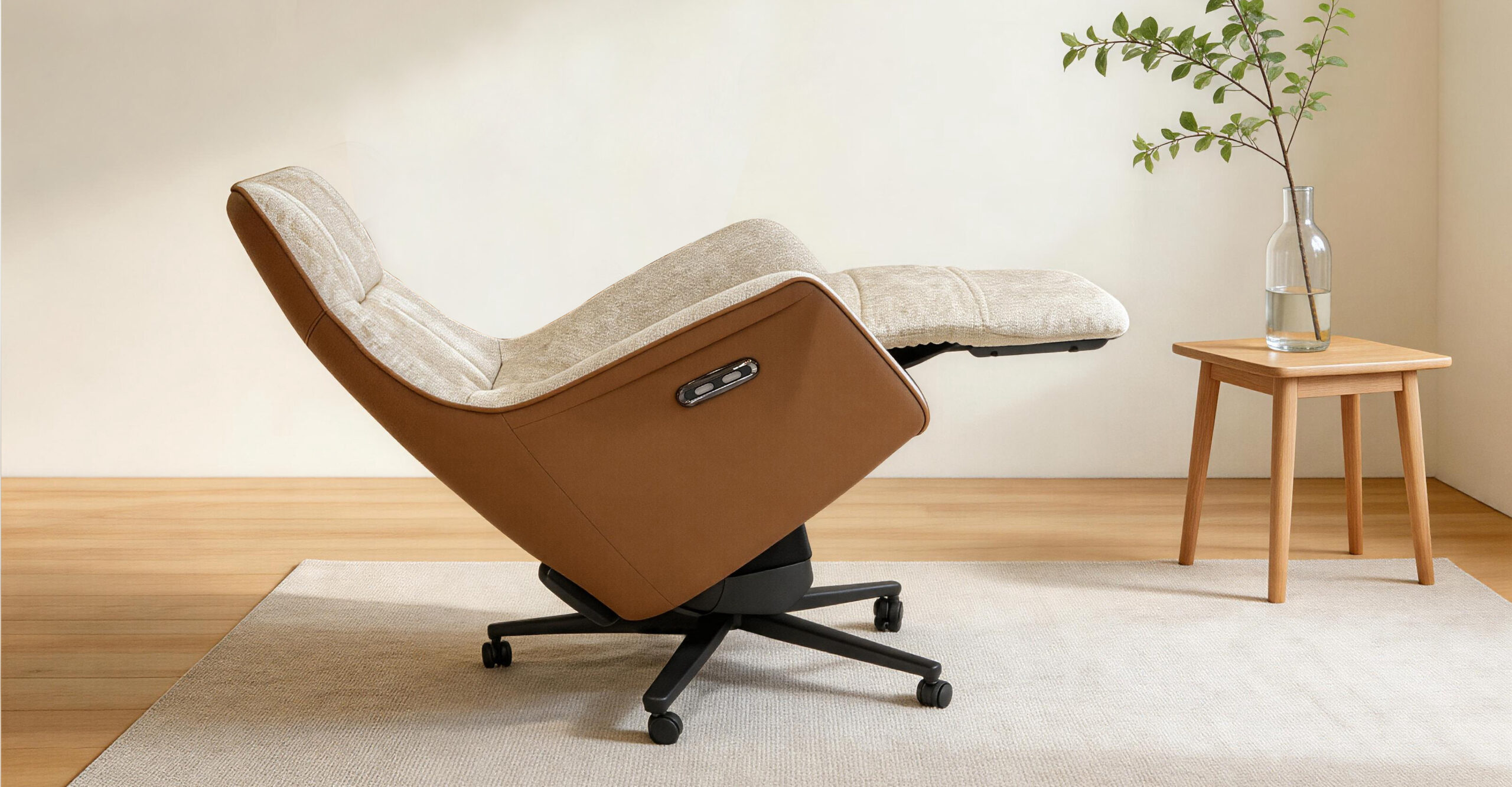
A zero-gravity recliner essentially copies this NASA-discovered posture. Instead of lying flat or sitting straight up, the chair lifts your knees and legs slightly above your heart. At the same time, it tilts your torso back. This creates a feeling of weightlessness. Gravity has not disappeared. However, your weight now spreads evenly across the entire chair.
Scientists found that the most relaxed position happens at a trunk-to-thigh angle of about 128 degrees. That is the sweet spot where your muscles and skeleton feel the least tension. Of course, small differences exist. NASA’s own research shows that gender, weight, and body shape can shift the perfect angle. Nevertheless, the main principle stays the same.
Here is the simple truth: when you sit in a zero-gravity recliner, your body stops fighting gravity. It finally rests.
What’s Actually Happening to Your Body?
So what does this mean for you—the person sitting in the chair, not floating in space?
1. Your spine gets a break.
In a normal chair, gravity pushes down on your lower back. Your vertebrae squeeze together. Your muscles work hard to keep you upright. Over time, this causes stiffness, pain, and tiredness. In a zero-gravity position, your spine rests along its natural curve. Pressure on your vertebrae drops. Your spinal discs can rehydrate. Consequently,your back finally gets time to recover.
2. Your blood flows better.
When your legs sit above your heart, your heart does not need to pump as hard to send blood back up from your lower body. This improves circulation. It reduces swelling in your legs and feet. It can even help with conditions like varicose veins.
3. Your muscles let go.
In a zero-gravity position, your muscles do not need to constantly hold you up. Tension fades away. Your joints feel less pressure. As a result, you experience a deep, full-body relaxation that no other seated position can match.
4. You breathe more easily.
This unique angle lets your lungs expand more fully. Your diaphragm stays free. For people with breathing discomfort or mild sleep apnea, this can be a big help.
Some studies even show that using a zero-gravity recliner can lower your heart rate and blood pressure. That means better cardiovascular relaxation.
It’s Not Just Furniture—It‘s Everywhere
This zero gravity recliner guide wouldn’t be complete without mentioning how carmakers adopted the same science.
Once NASA shared its NBP research, other industries quickly took notice.
In 2005, engineers at Nissan used NASA’s NBP data to create a new generation of car seats. They wanted to reduce driver fatigue. And it worked. Their tests showed a 50 percent drop in physical exhaustion during long drives. Nissan introduced these seats in the 2013 Altima. Today, you can find “zero-gravity seats” in many premium cars.
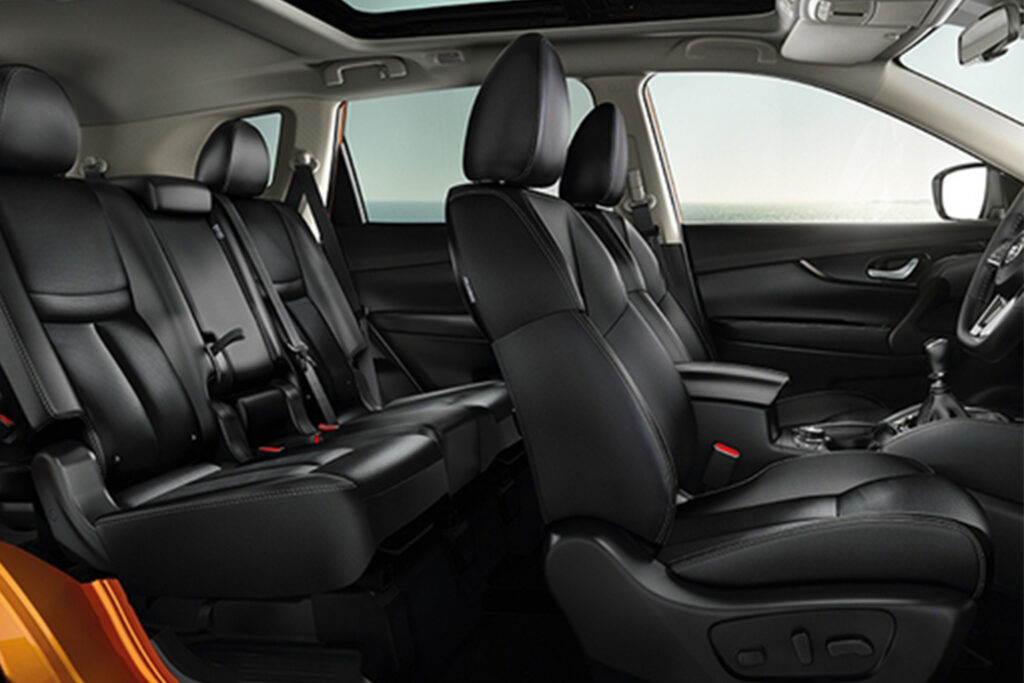
Moreover, the idea also spread to office chairs, medical massage chairs, and home recliners. What started as a tool for astronauts has become a global standard for human comfort.
Why This Zero Gravity Recliner Guide Matters Now
The global market for zero-gravity massage chairs was valued at over US$1.1 billion in 2025 . Furthermore, analysts expect it to reach US$2.1 billion by 2032. This is not just a passing trend. Instead, it represents a major shift in how we think about sitting.
Nowadays, people sit more than ever before. For instance, office workers spend eight or more hours a day in chairs. Meanwhile, remote workers often sit even longer. And all that sitting hurts our bodies.Unfortunately, back pain, poor circulation, muscle stiffness, and fatigue are just the start.
For this reason, a zero-gravity recliner is not a luxury item. Rather, it solves a real problem. Specifically, it helps undo some of the damage that modern life does to our bodies. And it does this using science that NASA developed to protect astronauts in space.
So, Is It Really NASA’s Gift to Your Back?
Yes. Quite literally.
Actually, NASA never set out to invent a better recliner. Instead, they were trying to solve a bigger problem. Specifically, how do you keep humans alive, healthy, and comfortable in the harsh environment of space? Along the way, they discovered something fundamental about the human body. When gravity finally lets go, this is the posture your body naturally wants.
Therefore, every zero-gravity recliner on the market today builds on that discovery. Indeed, it is a piece of space technology that landed in your living room.
When you sit in a zero-gravity recliner, you are not just relaxing. Rather, you are giving your body the same break that astronauts get in space.Your spine decompresses. Meanwhile, your muscles let go. Additionally, your blood flows freely.
And isn’t that exactly what your back has been asking for?
If you are looking for the perfect model, check out our [full collection of zero-gravity recliners] . Or, have questions? [Contact our team] and we’ll be happy to help.